The Language of Flowers

Snowdrop, Carnation, & Sweet Pea Birth Flower Watercolor Paintings by Brigit Rose Arts
The Language of Flowers - Birth Flowers - Pigments & Petals Blog Post
What is it about flowers that makes people stop and admire them? What is it about the sight of a flower that allows such a pleasant interruption in our day?
A flower's aura is almost hypnotic the way it can pull us in and allure us closer. To be swept in by colors, scents, and timeless beauty. It's intoxicating. The way some flowers whisper “pick me”. Or when you receive a bouquet you stage in a place of honor to be witnessed and enjoyed before the blooms decay.
We all know the saying “ stop and smell the roses”. A quote long known for its deeper meaning to slow down and enjoy what is right in front of us. Flowers are our life’s reminder to enjoy, savor, to bask in the present moment. In every culture all over the world flowers are symbols for wealth, beauty, and deep spiritual symbolism. The old world knew the language of flowers well. Although our modern world has led us to be long disconnected from this language, the plant kingdom remains an open gateway for us to immerse ourselves back into this vast trove of deep wisdom they carry.
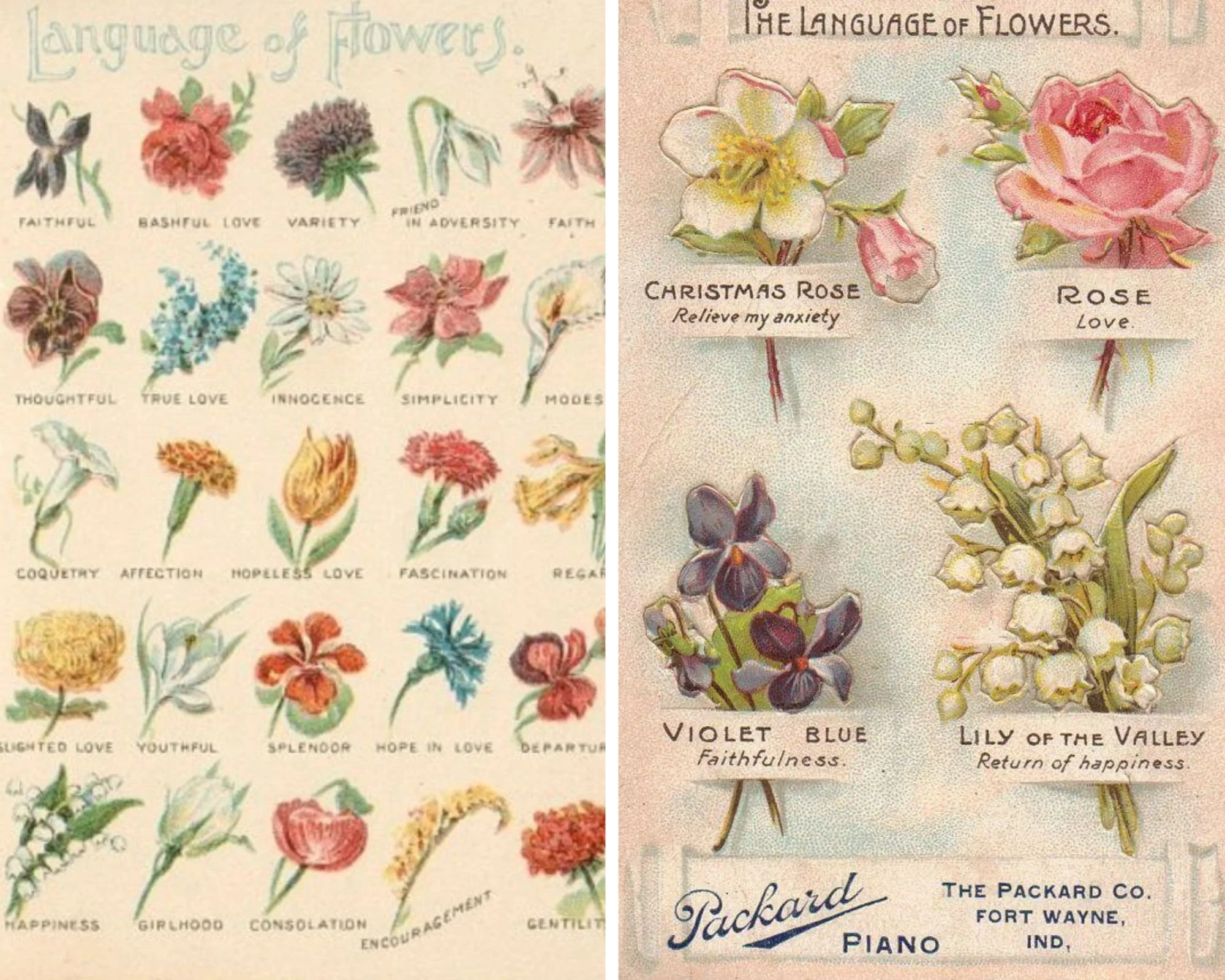
Victorian Floriology
The origins and symbols of birth flowers go back to ancient times. Origins from long standing traditions and cultures from all over the world. The Celtics, the Druids, the Highlanders, the Egyptians, the Romans, the Greeks, the Mayans, the Aztecs, the Japanese, the Chinese, and all the rich cultures that have woven their thread into the rich tapestry of history. With more recent accounts going back to the Victorian Era’s use of floriology and heavy influence from Christianity throughout time. They all seem to meet in this one sector. A universal language from our earth that people across many cultures have all come to similar conclusions. That plants and flowers are messengers and tell a story of their own.
Birth flowers are an amalgamation of these origins that fit into our 12 month calendar. Each month has designated flowers that hold their own unique message and codes.
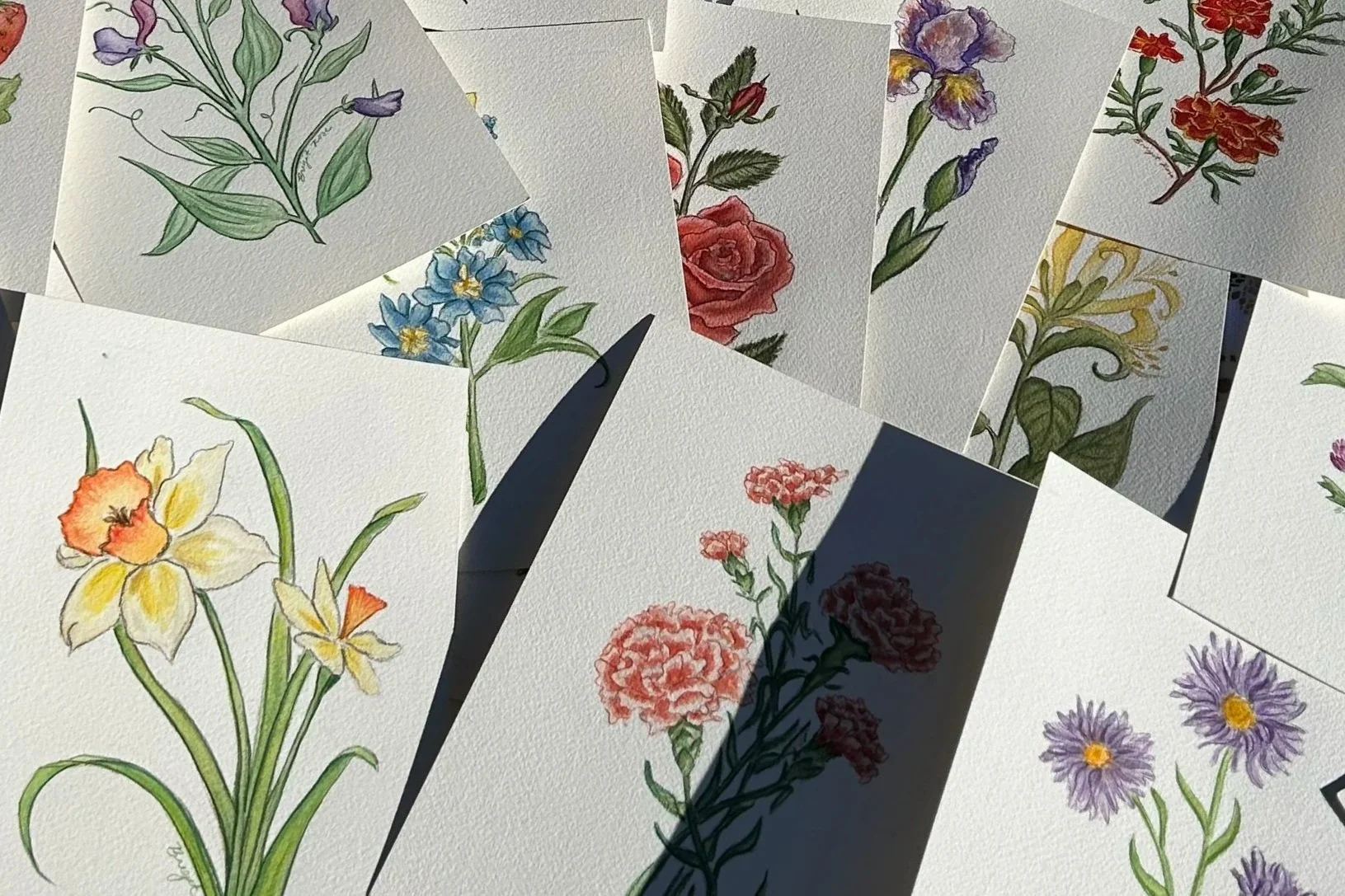
Daffodil, Carnation, & Aster Birth Flower Original Watercolor Spread by Brigit Rose Arts
January - Snowdrop & Carnation
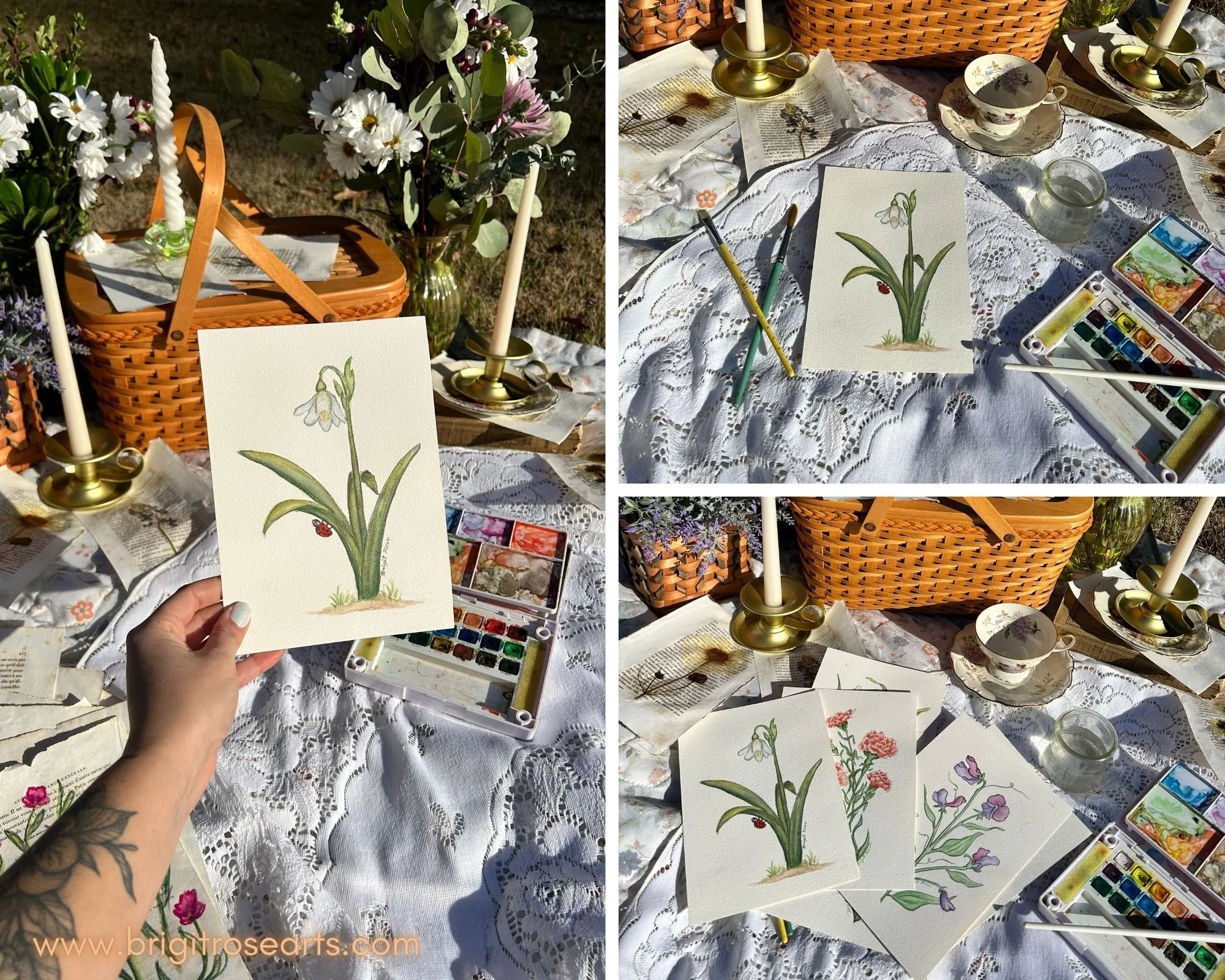
January Birth Flower Snowdrop Original Watercolor Painting by Brigit Rose Arts
January. This first month of the new year is still in the deep depths of the winter season and yet marks a period of beginning of renewal for many. January itself is a fresh start, a time to begin again but not a time for planting seeds. January is a time to feel into what the year will bring forth for us. A time to still enjoy the darker hours of the day and keep warm. The month holds a purity to it. A stillness that comes after the holidays have come and gone. January is what is left in its wake. The flowers associated with January are Snowdrops & Carnations. Their message to us for January is that after darkness there is light, where it was once cold and still will be the same space where life flourishes.
Snowdrops’ message to us is:
Where it was once cold and dark will be the same space where life flourishes.
Snowdrops are beautiful white flowers that are some of the first to pop up at the end of winter. Sometimes you can still see snow on the ground as these poke through. They are a wondrous juxtaposition to witness while snow is still present. Snowdrops symbolize hope, purity, renewal, consolation and innocence.
Folklore: Eves tears turned into snowdrops but some legends saw it was angles turning snow flakes into snowdrops
Said to be bad luck to bring in snowdrops before spring
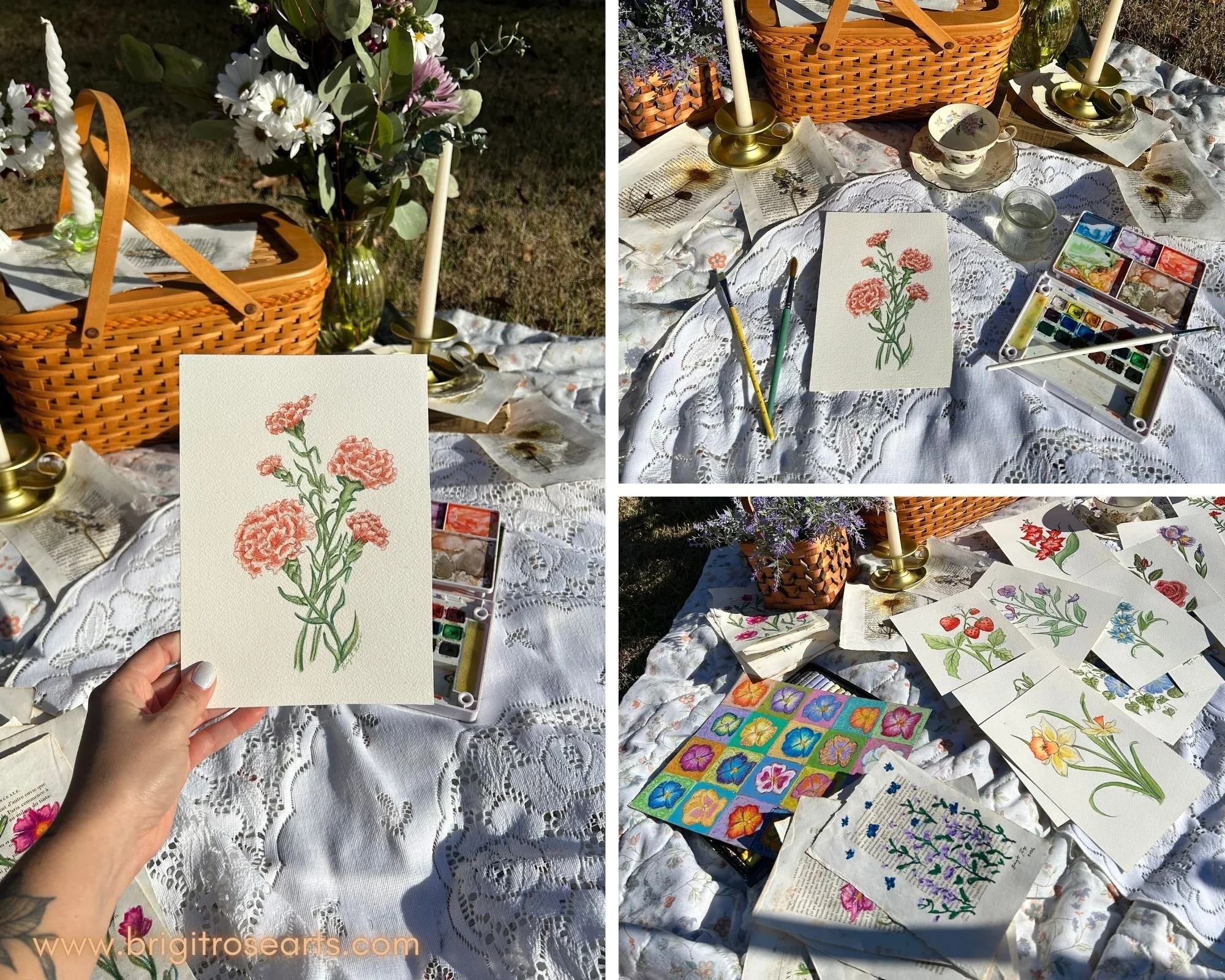
January Birth Flower Carnation Watercolor Original Painting by Brigit Rose Arts
Carnation’s message to us is:
There is love even in the most unlikely places.
Carnations are a variety of different colored blooms with multiple layers of ruffled petals. Their petals depending on their colors can have different meanings and symbolism. Even in the middle of winter January is prime time for carnation blooms. Known as the flower of the gods, carnations symbolize good fortune, love & deep admiration when blooms are red. Carnations with pink represent motherly affection and gratitude. White is for purity, luck, and remembrance while purple means regret or refusal and striped blooms meaning unpredictability in life.
Folklore: In some European traditions, carnations were used in weddings to grant protection and fidelity for the couple.
In Victorian floriography, carnations conveyed strong emotional messages of deep love or potential refusal in a suitor depending on the color.
February - Iris, Violet, & Primrose
February, the month of love. The perfect in-between space where we are starting to inch closer to spring but still wrapped in winter's embrace. February holds for us some steadiness in its days. The year ahead is starting to take shape but also the rebirth of spring is waiting for us ahead. With only 28 days in this month it tells us to savor every bit. For a romantic month there are three very romantic flowers that go with it. February’s flowers are Iris, Violet, and Primrose. Their message for us is simple. Whether its faith, loyalty, or passion, love is the epicenter for it all. When we love we are celebrating what it is to be alive.
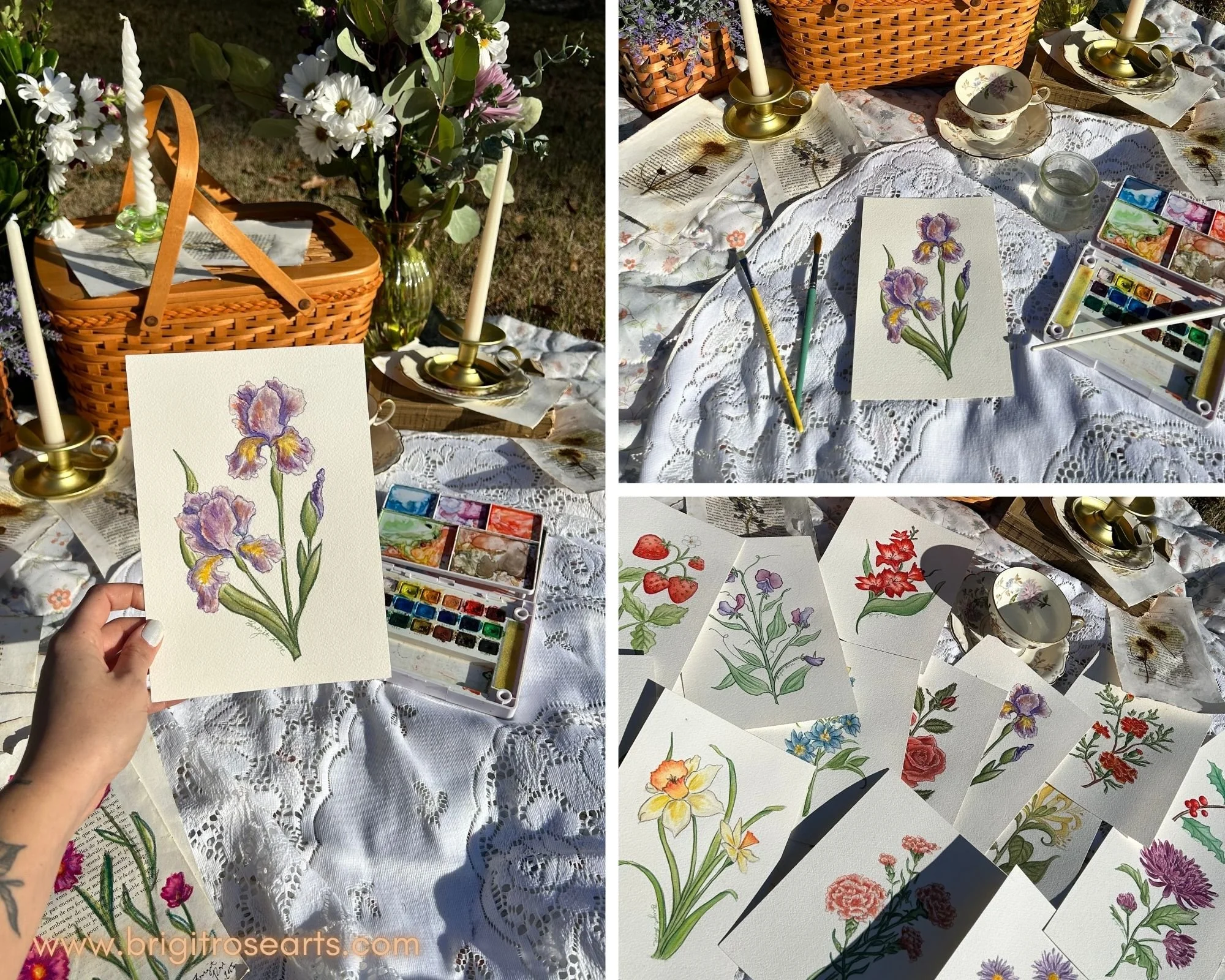
February Birth Flower Iris Original Watercolor Painting by Brigit Rose Arts
Iris’ message to us is:
Have courage to stand tall in your faith. Wisdom is all around you.
Iris is a regal, tall flower with a variety of colors that we see at the beginning of spring. A clear sight that spring is near. Their sweet smell, a soothing balm after winter, slowly shifting to spring. Irises call forth messengers of faith, courage, wisdom, hope, purity and innocence.
Folklore: The personification of the rainbow in ancient Greek religion and mythology
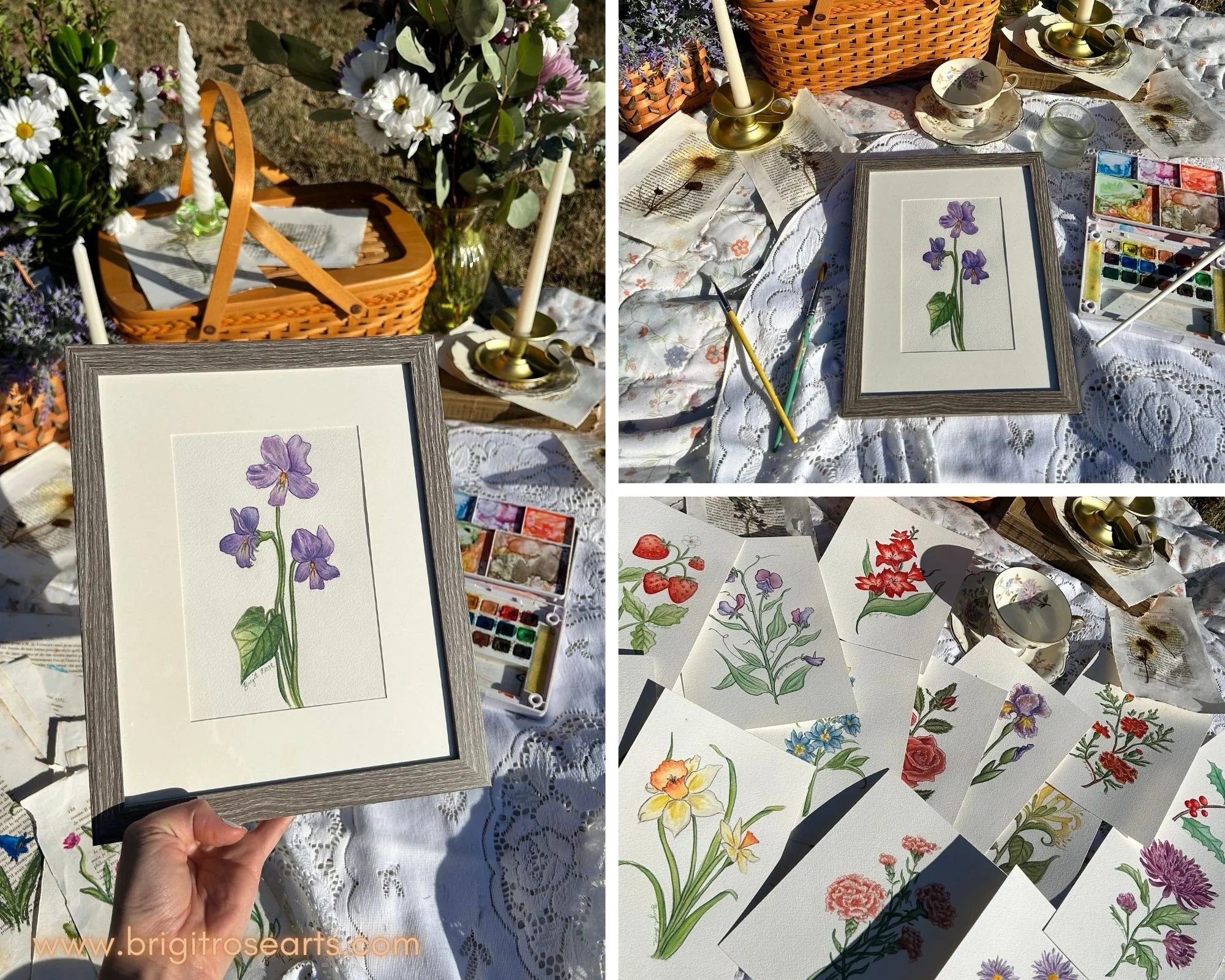
February Birth Flower Violet Original Watercolor Painting Framed by Brigit Rose Arts
Violet’s message to us is:
Life’s most simple lessons are where true beauty and wisdom are hidden.
Violet, one of the most vivid and beautiful colors on the spectrum. Violets are royal purple flowers with the most perfect golden yellow in the center. Nature's color theory at its finest creates the most striking bloom with these two complementary colors. Nature is after all the original artist. Violet's messages to us are loyalty, truth and humility.
Folklore: Violets were also used to make love potions in ancient Greece – an idea borrowed by William Shakespeare in A Midsummer Night’s Dream.
Medieval monks called them “herbs of the Trinity” because of their three-parted leaves
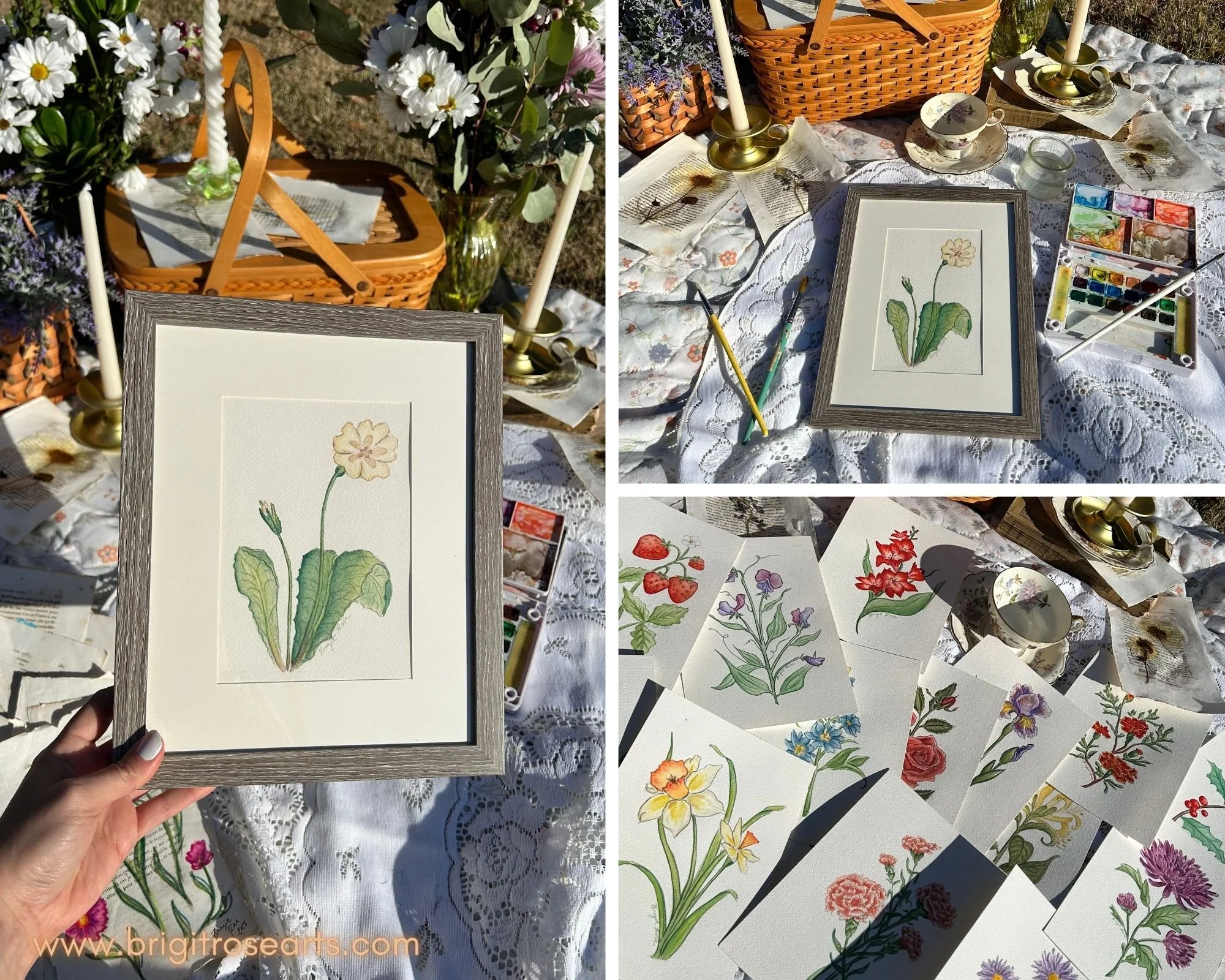
February Birth Flower Primrose Original Watercolor Painting Framed by Brigit Rose Arts
Primrose’s message to us is:
Don't let go of your inner child. The purest form of love is found in youth.
Primrose. Romantic all on its own without even the association of February. Buttermilk colored blossoms that seem to be thoughtfully sprinkled through grass fields and in small patches near sidewalks like little buds of joy. Primroses represent new beginnings, undying affection and young love.
Folklore: In Celtic lore, primrose petals set at a threshold were said to protect the home from fairies.
A bouquet of primrose was used as a charm for attracting love. An old world’s love spell.
March - Daffodil
Spring has sprung! Perhaps a little cold still in most places in the United States but March brings to us at last the promise of spring. The days are getting longer, the air a little warmer, and the best sign of all…the flowers! March’s flower is the famous Daffodil. They bring to us the promise of spring and the reminder that rebirth is a constant we can count on.
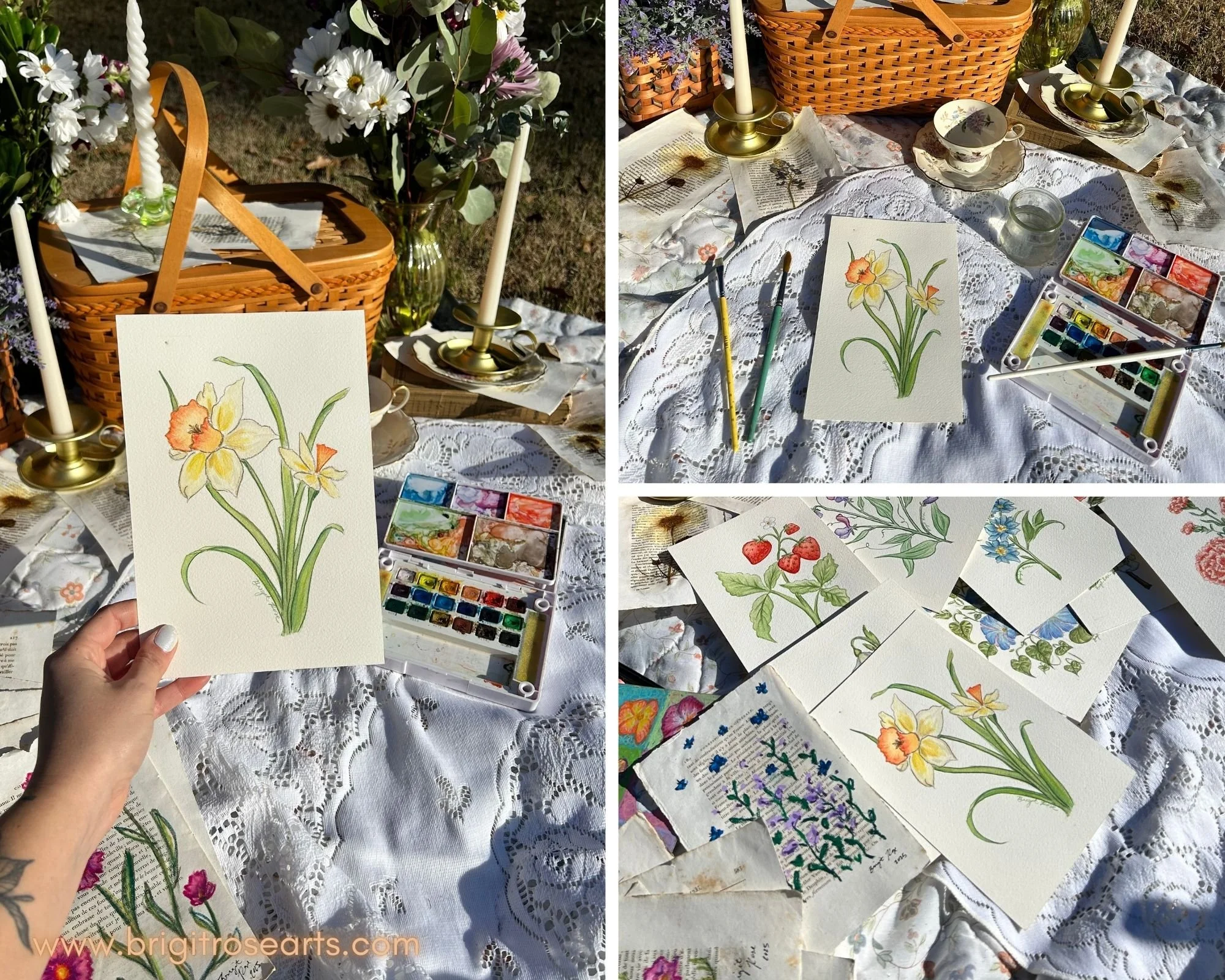
March Birth Flower Daffodil Original Watercolor Painting by Brigit Rose Arts
Daffodil’s message to us is:
Resilience is born from devotion and consistency, not just miracles.
Daffodils bloom in beautiful tints of yellow and white with vivid orange centers mimicking a duck’s bill. Found in gardens and lawns all across the country, they are a true sign that spring is here. Daffodils represent new beginnings, joy, and resilience.
Folklore: it's believed to be bad luck if given only a single daffodil, a bouquet brings in wealth at the beginning of spring.
April - Daisy & Sweet Pea
April is a month of true rebirth. Gone away are all signs (hopefully) of winter and a rebirth takes place. Both physically and energetically. We can see it in our skies, feel it in the air, and sense it with our bodies. As the astrological new year takes place a fire is set that burns away anything not serving us anymore. A huge month as we enter into our eclipse season in May. We start to feel it here in April. The flowers associated with April are Daisy & Sweet Pea. Their message to us in the month of April is to savor the sweetness of the here and now.
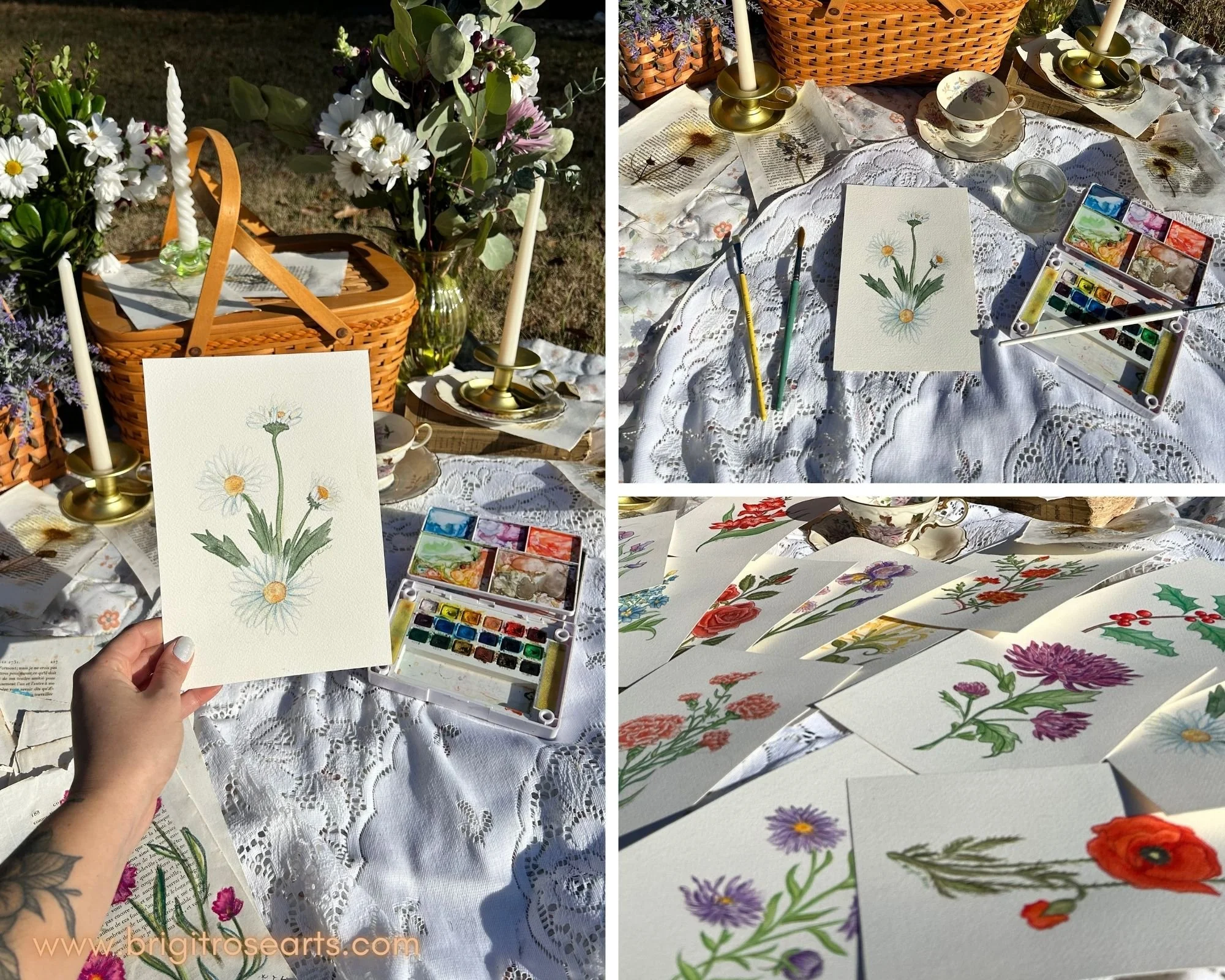
April Birth Flower Daisy Original Watercolor Painting by Brigit Rose Arts
Daisy’s message to us is:
The sweetest things in life are free.
Daisy flowers are mostly commonly seen with delicate white petals with a golden yellow center. Daisy can bloom in multiple beautiful colors like pink, yellow, orange, purple and red. Daisy's representation is as pure as the white petals it grows. They represent purity, innocence, fertility, motherhood, childhood, and cheerfulness.
Folklore: In Norse mythology, daisies were sacred to Freya, goddess of love and fertility.
According to Roman myth, daisies formed when a nymph transformed to escape unwanted attention.
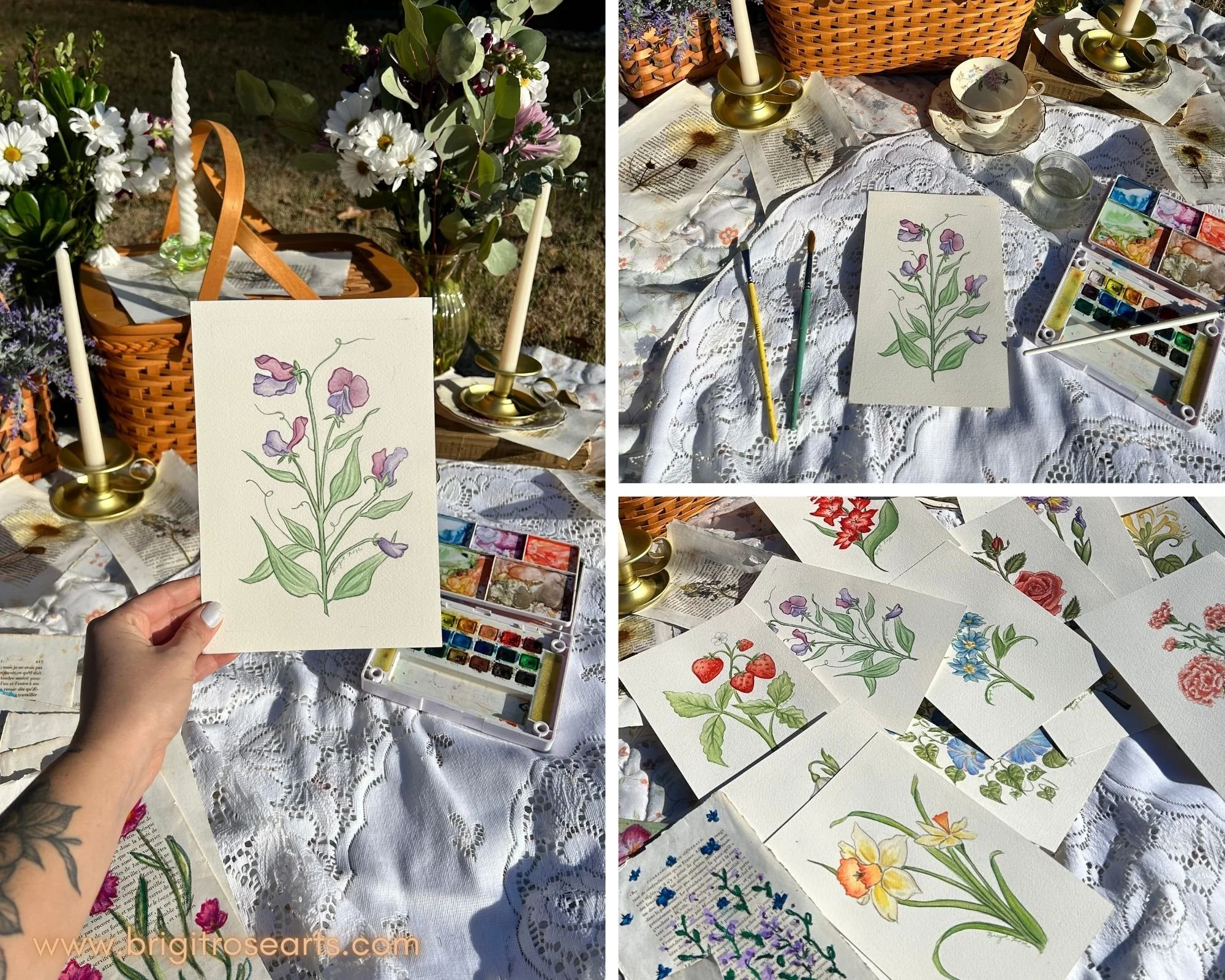
April Birth Flower Sweet Pea Original Watercolor Painting by Brigit Rose Arts
Sweet Pea’s message to us is:
Gratitude is the most powerful of prayers.
Sweet Peas (my personal favorite flower in the collection) are the most darling buds. Not only are they the most intoxicating fragrance but their flowers are cute as buttons. They perfectly fit into April's theme of rejuvenation and rebirth. The sweet pea flower symbolism is pleasure, gratitude, and bliss.
Folklore: In Victorian times, sweet peas were given to express thanks for a lovely time.
They were believed to bring good luck when planted near the home.
May - Hawthorn & Lily of the Valley
The most magical month of the year (in my humble opinion as a May Taurus baby) as we are soaking up the fertile soil before we plunge into summer time. May truly does hold a magical essence to it. There’s a mystical element of “anything can happen” in the air. The seeds planted earlier in spring, physical and metaphorical, are starting to grow bigger as their roots sink deeper into the ground. May’s flowers are Hawthorn & Lily of the Valley. Their message for the month of May is magic is everywhere, all you have to do is look.
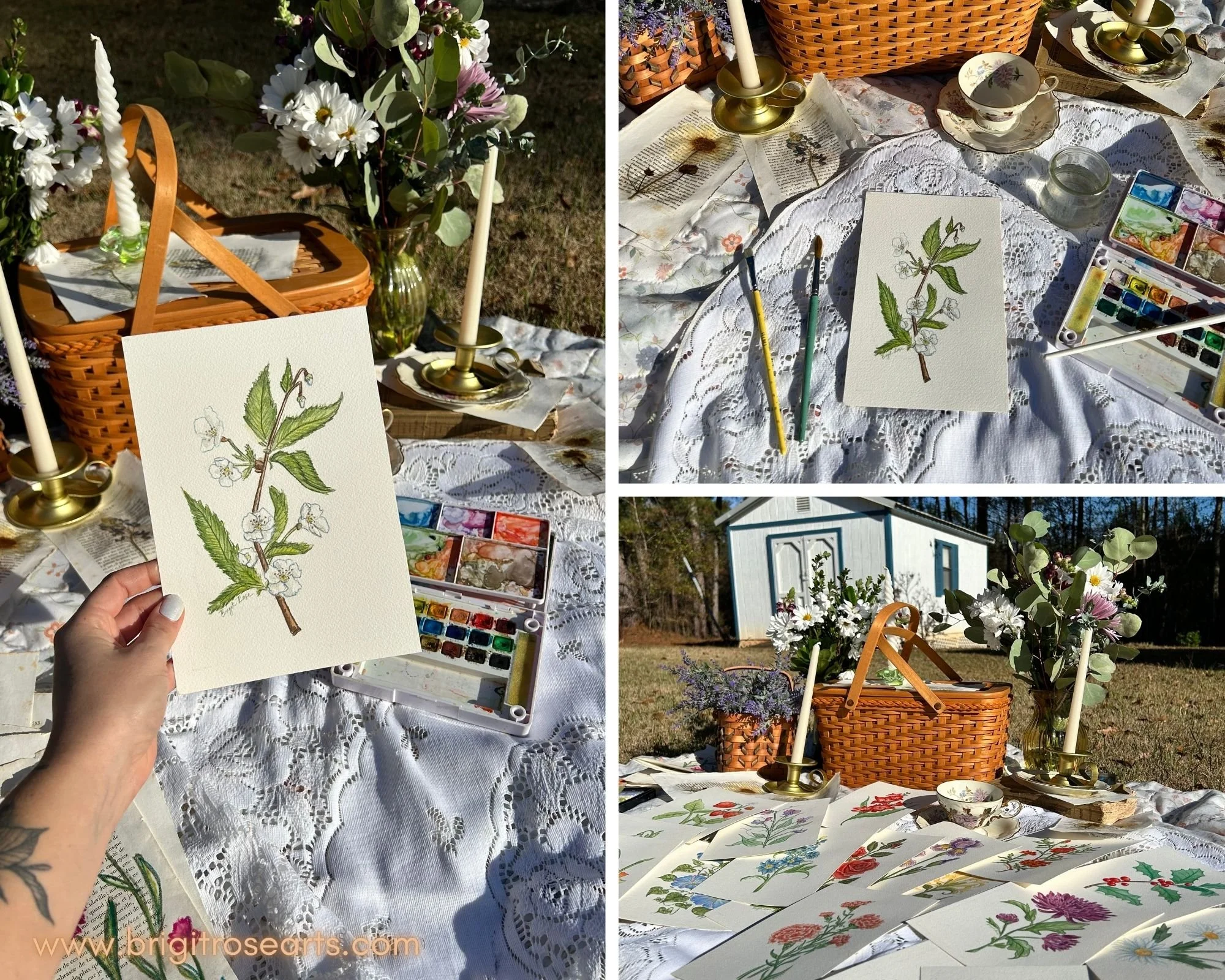
May Birth Flower Hawthorn Original Watercolor Painting by Brigit Rose Arts
Hawthorn’s message to us is:
There is magic in the mundane.
Hawthorns are beautiful white flowers that grow from thick bushy branches. These blooms are part of the rose family and their magic is undeniable. From their crisp white petals and heavenly smell it's easy to understand the mystical folklore when it comes to these flowers and fairies. Hawthorns represent purification, magic, hope, fertility, and protection.
Folklore: Strongly tied to fairies in Celtic lore; disturbing a hawthorn bush could bring bad luck.
Maypoles were often decorated with hawthorn blossoms.
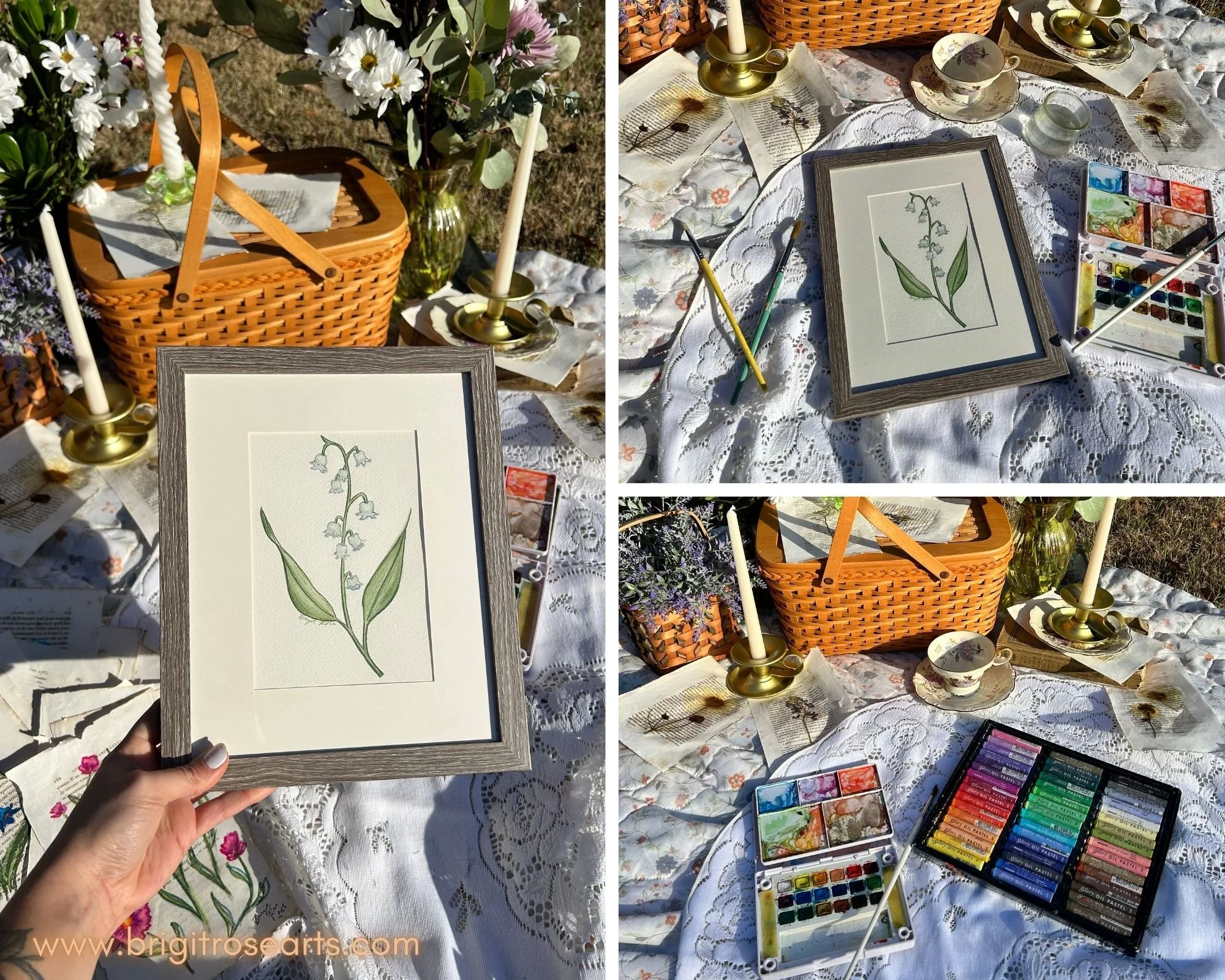
May Birth Flower Lily of the Valley Original Watercolor Painting by Brigit Rose Arts
Lily of the Valley’s message to us is:
The most humble people truly find happiness.
Lily of the Valley are bell shaped blooms that grow downwards in arching heaps of delicate white. To see them in person is a magical experience. They seem to have grown out straight from a story book. Their beautiful small flower clusters and deep green leaves make you feel like you're walking through an enchanted forest. They are small in stature but mighty in presence. Lily of the Valley symbolism is joy, humility, and sweetness.
Folklore: In some European traditions, it was used to protect gardens from evil spirits.
June - Rose & Honeysuckle
June. Days are longer, the kids get out of school, the pool is open! Life is good. We have a whole beautiful summer ahead of us. Sunrises to catch and sunsets to chase. Nothing beats a mid day summer nap or a fresh glass of iced tea on the porch. June always feels so special to soak in before the days of summer start to slip through our fingers. June’s flowers are the regal Rose & the sweet Honeysuckle. They are the jewels of the summer and their message for June is life is sweet when we slow down.
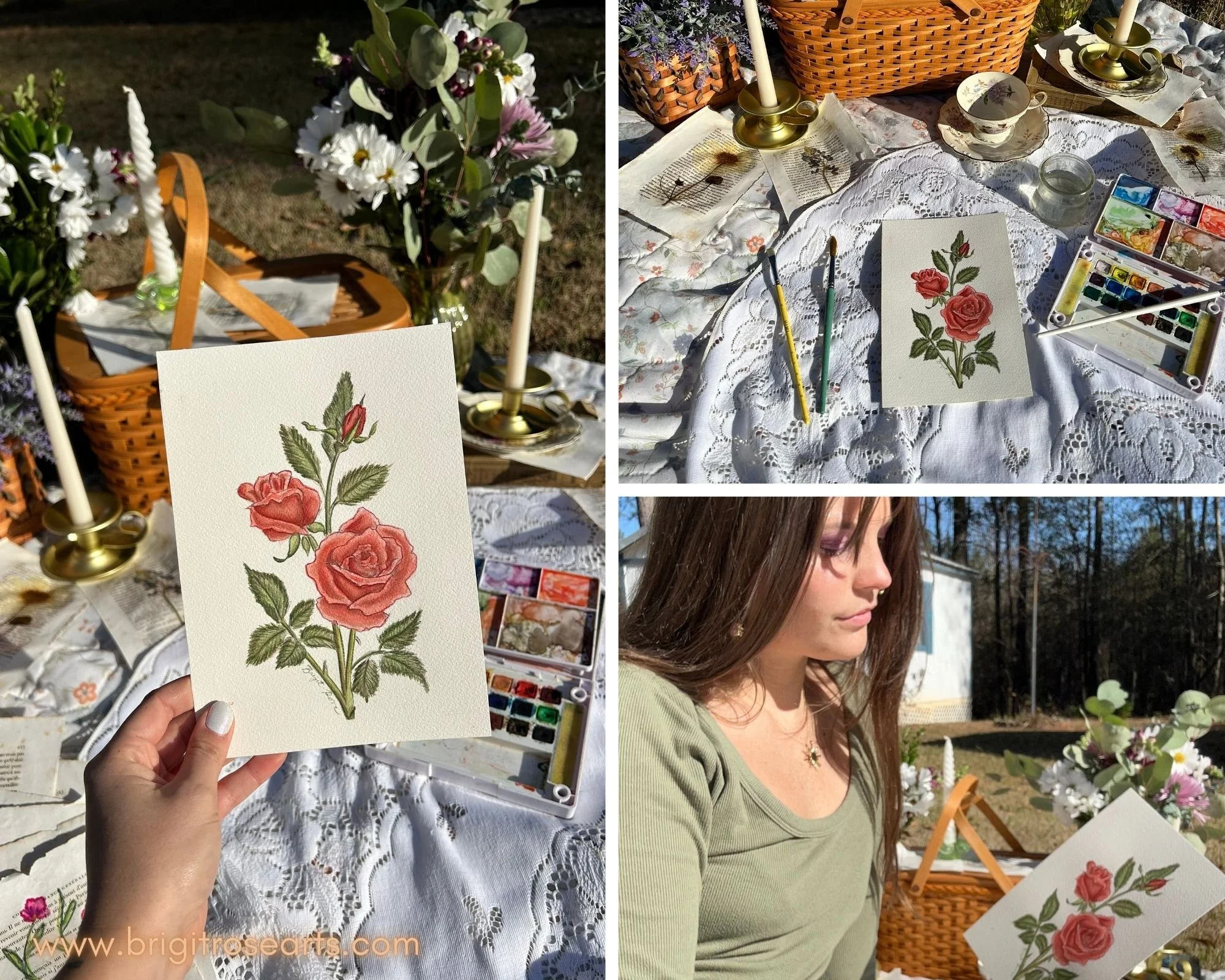
June Birth Flower Rose Original Watercolor Painting by Brigit Rose Arts
Rose’s message to us is:
Love is an open door.
Rose, the most famous flower of them all. Romantic, soft, but with a thorny edge. Roses are known across the world for their high vibration, intoxicating smell and perhaps the most popular scent throughout history. Roses messagers are well known to all by just their energy alone. They are messengers of love, beauty, and passion in their icon color of rose red. Yellow roses represent the sweet love of friendship and grandma’s kisses while a simple white bloom means purity.
Folklore: In Greek myth, roses were created by Aphrodite’s tears and Adonis’s blood.
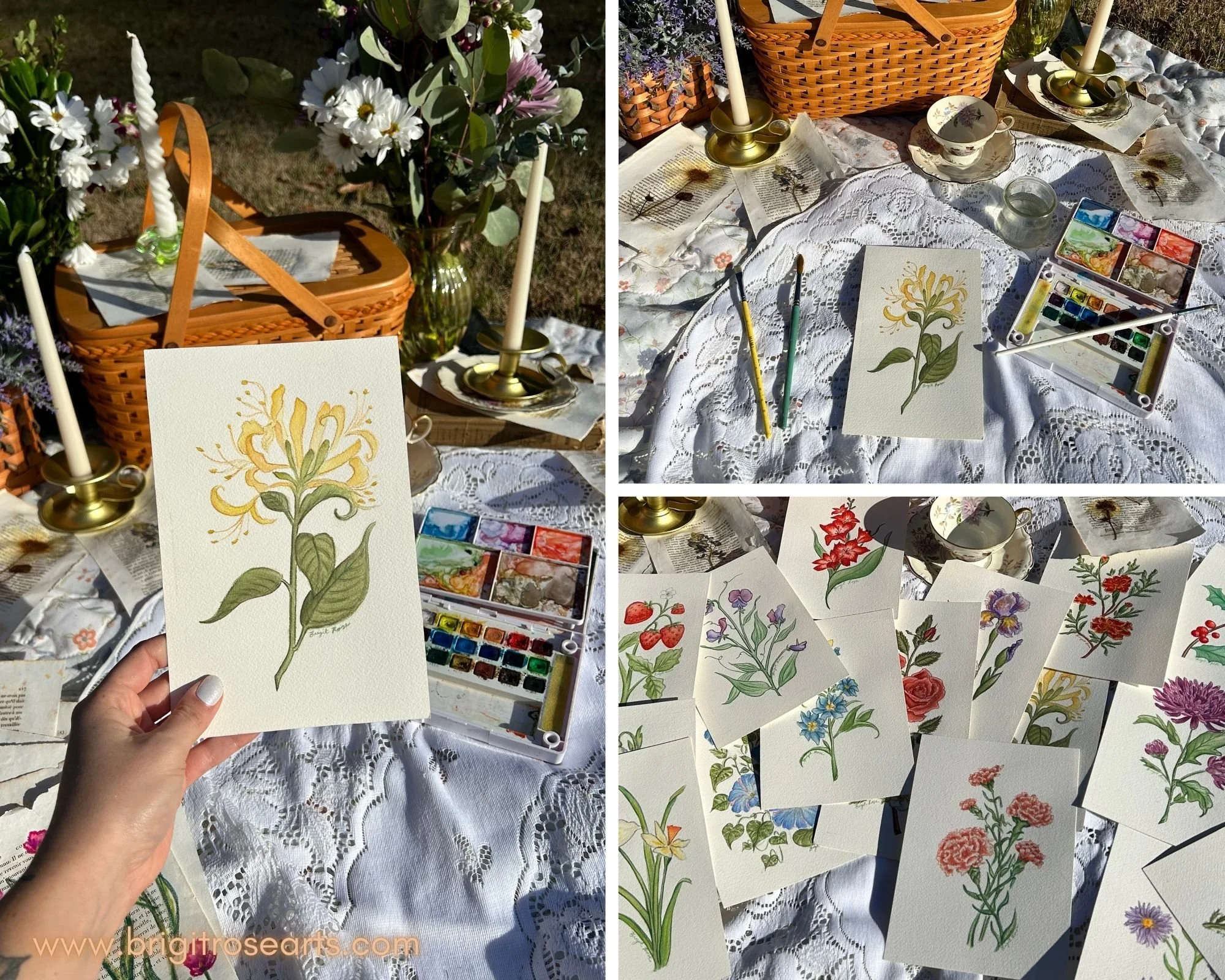
June Birth Flower Honeysuckle Original Watercolor Painting by Brigit Rose Arts
Honeysuckle’s message to us is:
Through devotion our love becomes eternal.
Honeysuckle are flowers known for its sweet smell and honey like nectar. When this jewel of the summer is in bloom and scents the air we know summer is here. Honeysuckles are famous for their sweet nectar loved by humans and pollinators alike. They are messengers of happiness, eternal love and sweetness.
Folklore: Said to bring good luck and protect the household when grown around the door.
A Victorian symbol of fidelity.
July - Waterlily & Delphinium
July is a month that brings us summer vacations, iced coffee drinks and memorable moments of fun in the sun. It's the best time of year to get an early start and hit the water before it gets too hot outside. The flowers that represent July are Waterlilies & Delphiniums. They bring in messengers of beauty, inner peace and protection.
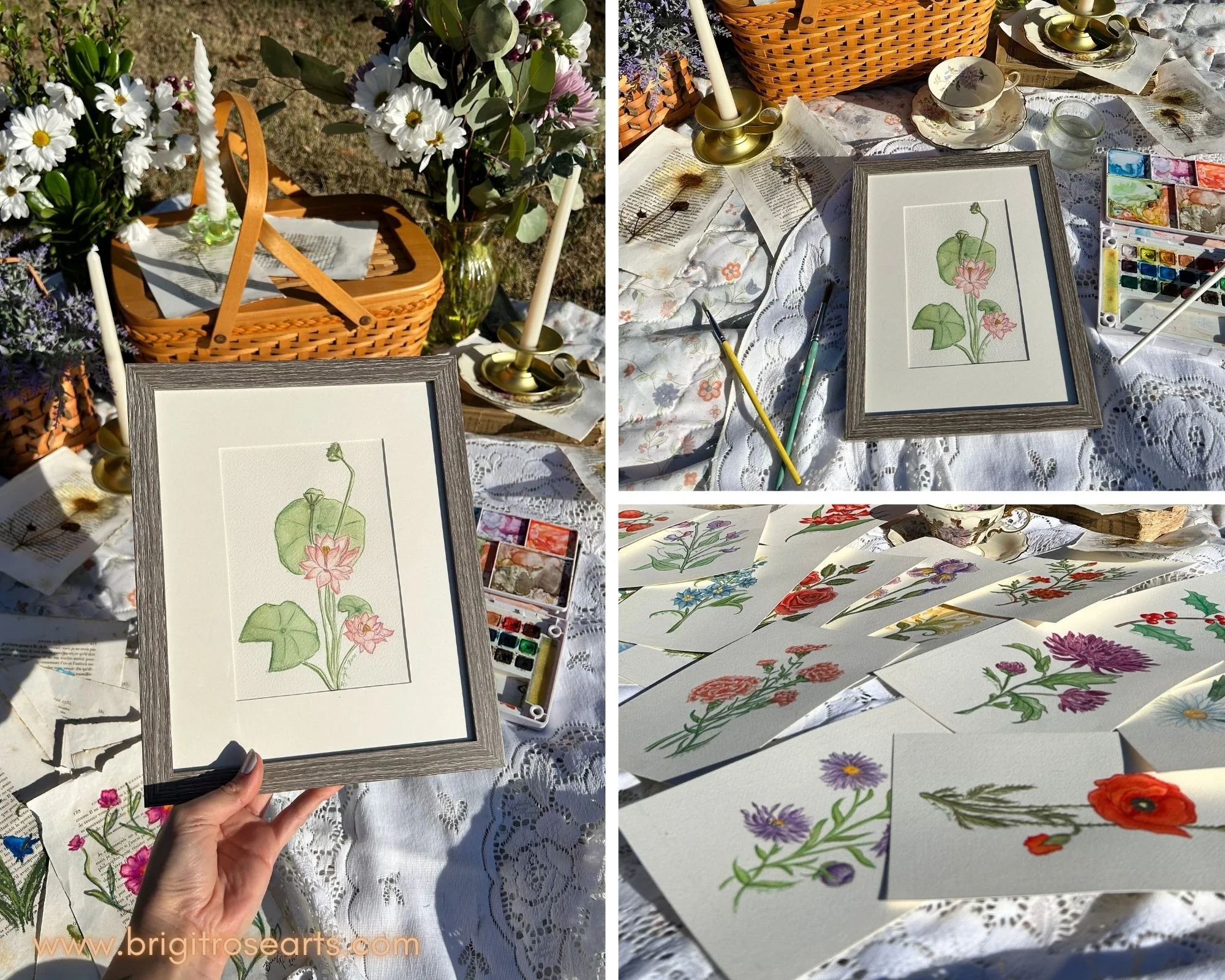
July Birth Flower Waterlily Original Watercolor Painting by Brigit Rose Arts
Waterlily’s message to us is:
The answers you seek come from a place of peace.
Waterlilies are the perfect flower for July. They love to bloom in hot murky water and show off their blooms in the peak of summer. Their beautiful pointed petals resting peacefully on the water’s surface. Frogs, dragonflies, and fish complete the most tranquil atmosphere a flower can grow in. Waterlilies represent purity, enlightenment, rebirth, peace, and spiritual awakening.
Folklore: In Egyptian mythology, the sun god Ra was born from a blue water lily.
In Hindu tradition, they symbolize divine beauty.
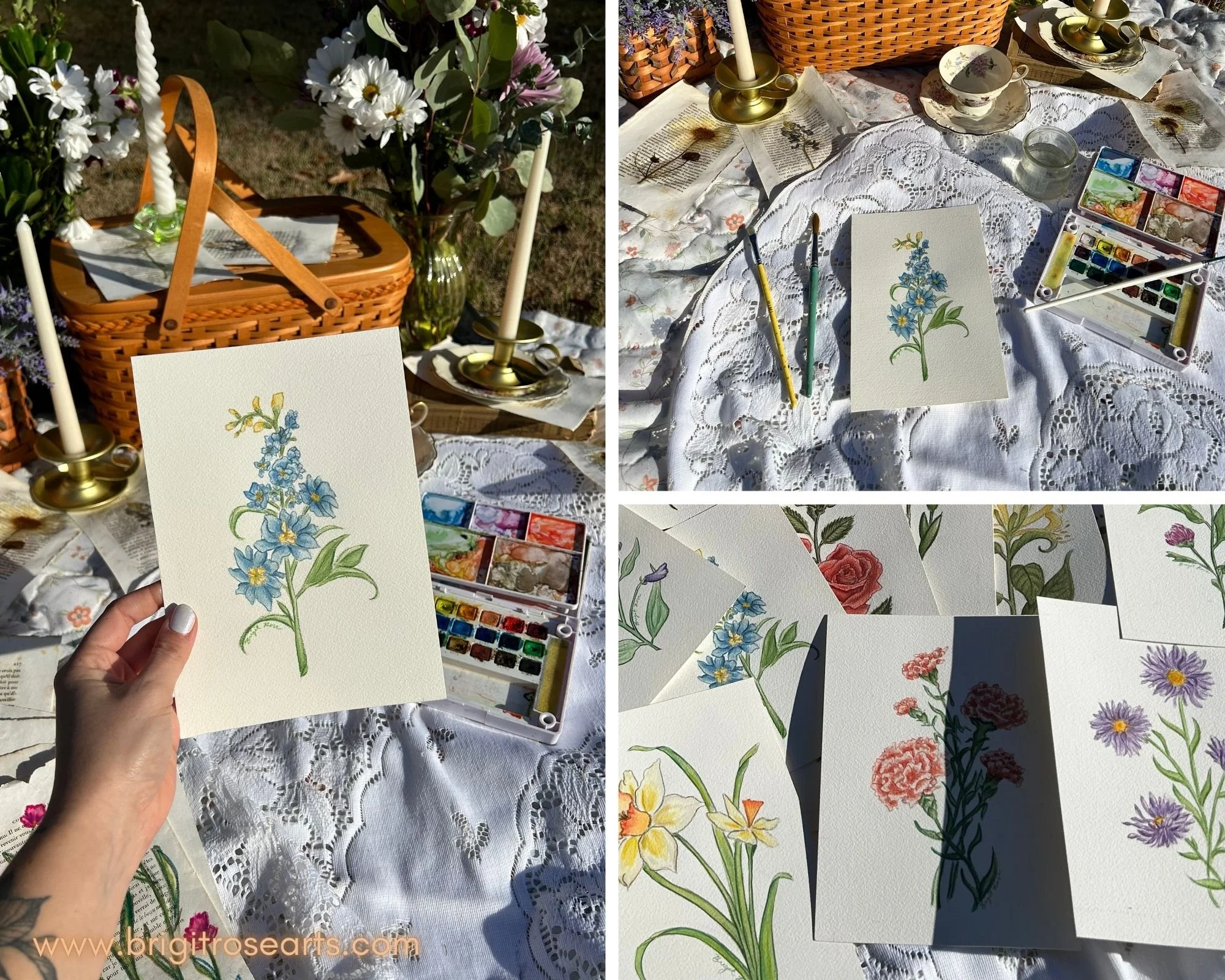
July Birth Flower Delphinium Original Watercolor Painting by Brigit Rose Arts
Delphinium’s message to us is:
Wield your kindness like a sword.
Delphinium flowers grow in vivid blue hues and tall bud clusters. A staple in any urban or fairy garden in the summer. They are a favorite amongst the buzzing pollinators and busy bees. Even the name Delphinium gives us a watery wisdom essence of Delphin the water oracle. The deep blue buds are reminiscent of the water but they also bloom in purple, pink and white. Their wisdom for us is dignity, grace, good will, and are symbols of protection.
Folklore: Delphiniums bring protective energy. Historically, people used the plant to keep insects and harm away.
That protective meaning goes deeper, spiritually shielding you from negative influences and toxic energy.
August - Poppy & Gladiolus
August always holds a sense of grief to it. Grief in the way of the end of summer, seasons shifting and the beginning edges of nearing the end of the year. We look back on the last 2 or 3 months and think “where did it go?”. August is also a month of new beginnings. The fall wedding season is starting, a new school year approaches, and harvest season is upon us. It's a month where we are really starting to see the fruits of our labor start to come into fruition. The flowers for August are Poppy and Gladiolus. They bring forth the wisdom of beauty in grief and resilience.
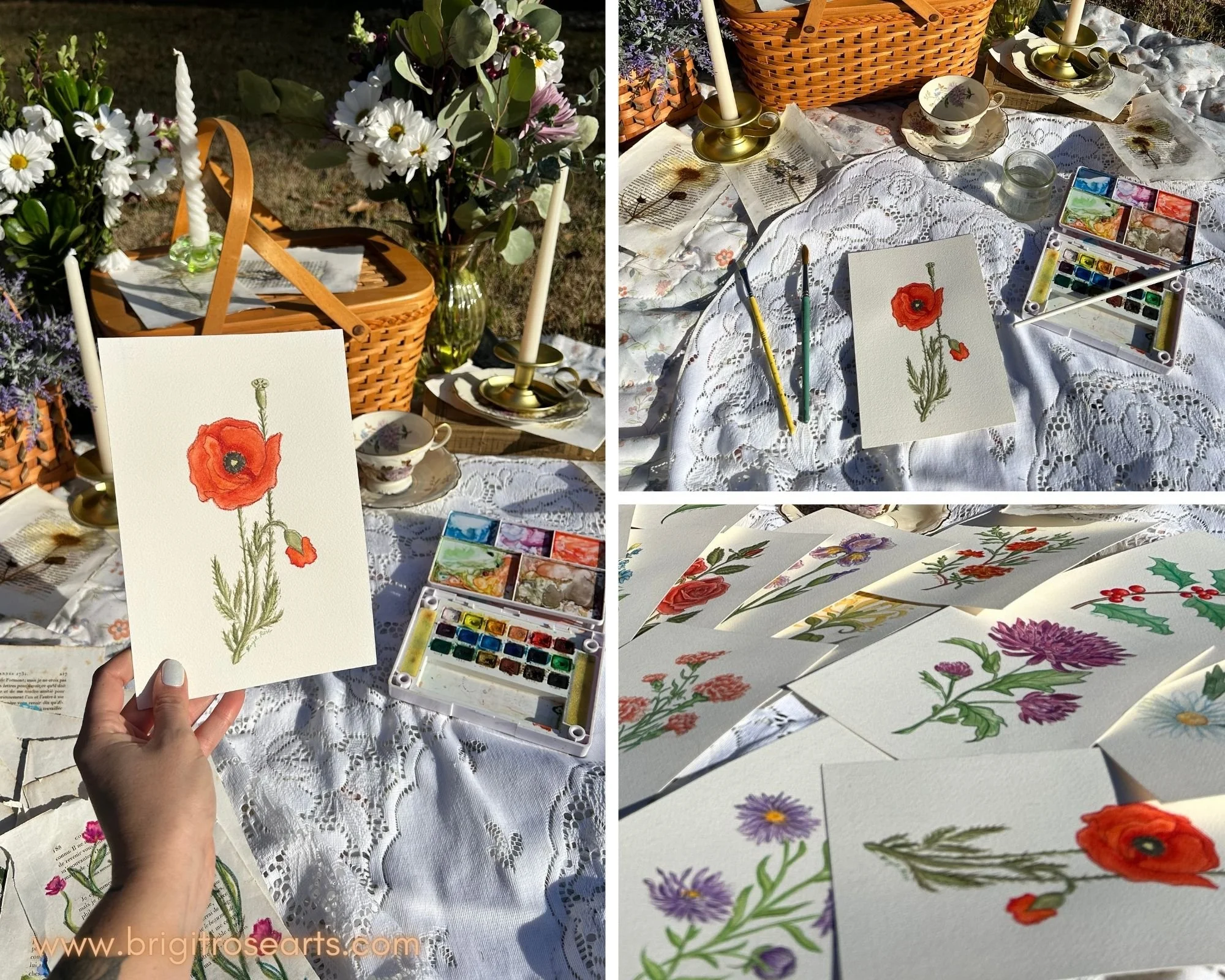
August Birth Flower Poppy Original Watercolor Painting by Brigit Rose Arts
Poppy’s message to us is:
There is power in the unseen forces.
Poppy flowers are bright red blooms known for their euphoric effects and iconic hue. Poppy red is a staple in many artist color palettes. Their bold centers like deep eyes gazing back at its viewer. Poppy flowers are symbols of remembrance, peace, eternal rest, dreams and consolation.
Folklore: Associated with Morpheus, the Greek god of dreams.
In WWI and WWII, poppies became symbols of remembrance.
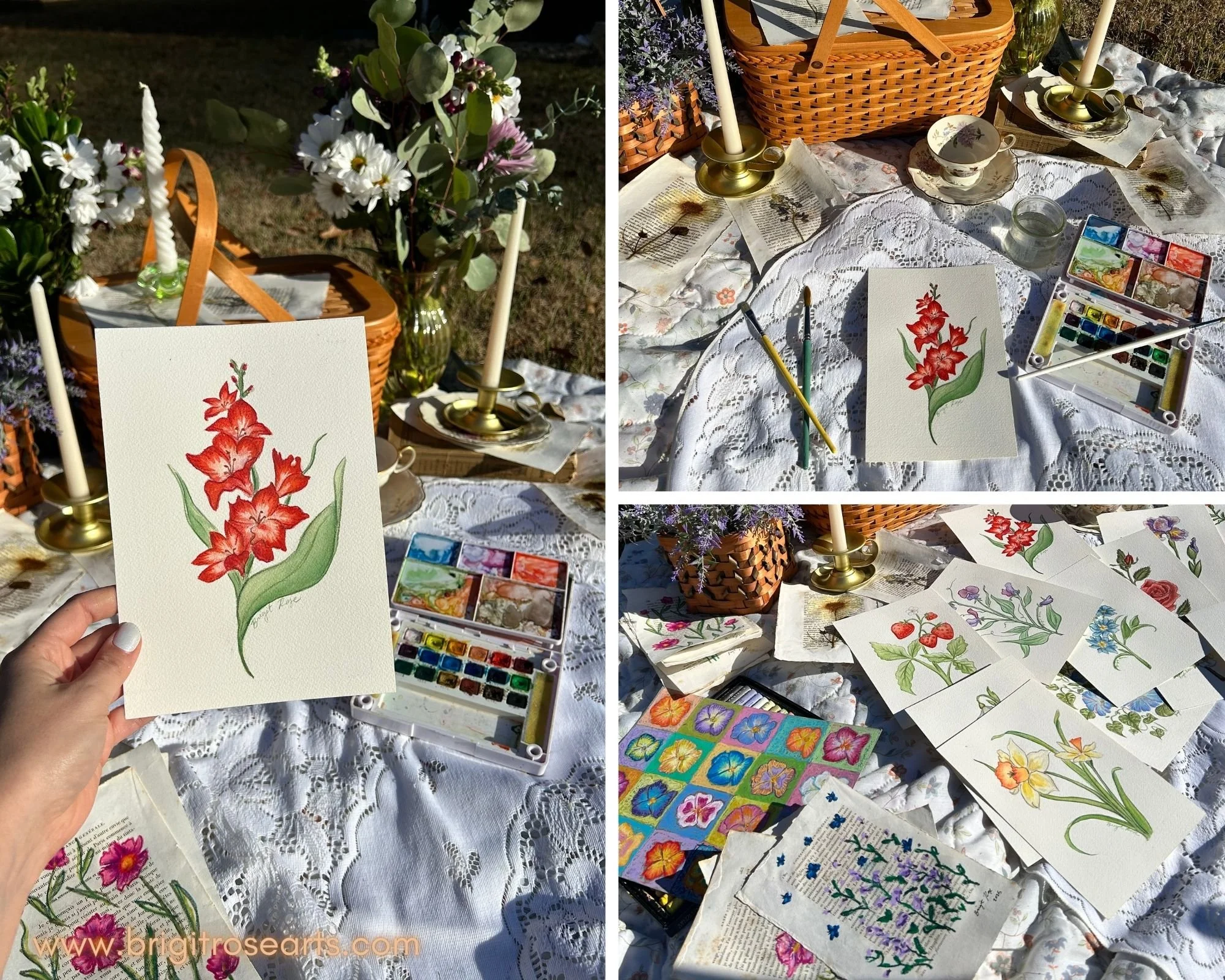
August Birth Flower Gladiolus Original Watercolor Painting by Brigit Rose Arts
Gladiolus’ message to us is:
True strength is measured by your integrity.
Gladiolus are tall bold blooms with beautiful stripes and eye-catching clustering flower display. A warrior of a flower that stands proud in any fairy garden. These razor-shaped buds represent strength, longevity, and integrity.
Folklore: Named “sword lily” for their blade-like leaves—Romans believed wearing gladiolus charms brought protection in battle.
September - Aster & Morning Glory
September holds the changing of the seasons and our first official day of autumn. It's the best of both worlds to welcome in a new season before we see the light shift for winter. Gardeners are preparing for their final harvest and beginning to prepare to winterize their gardens. With the heat of the summer leaving behind crisper mornings and cozy fireside evenings this month mirrors similar themes we see around May. Transformations are starting to take place as we begin to experience the thinning of the veil in October. The flowers for this month of Asters and Morning Glories. September and these flowers hold for us the wisdom of our elders and timelessness in the mundane.
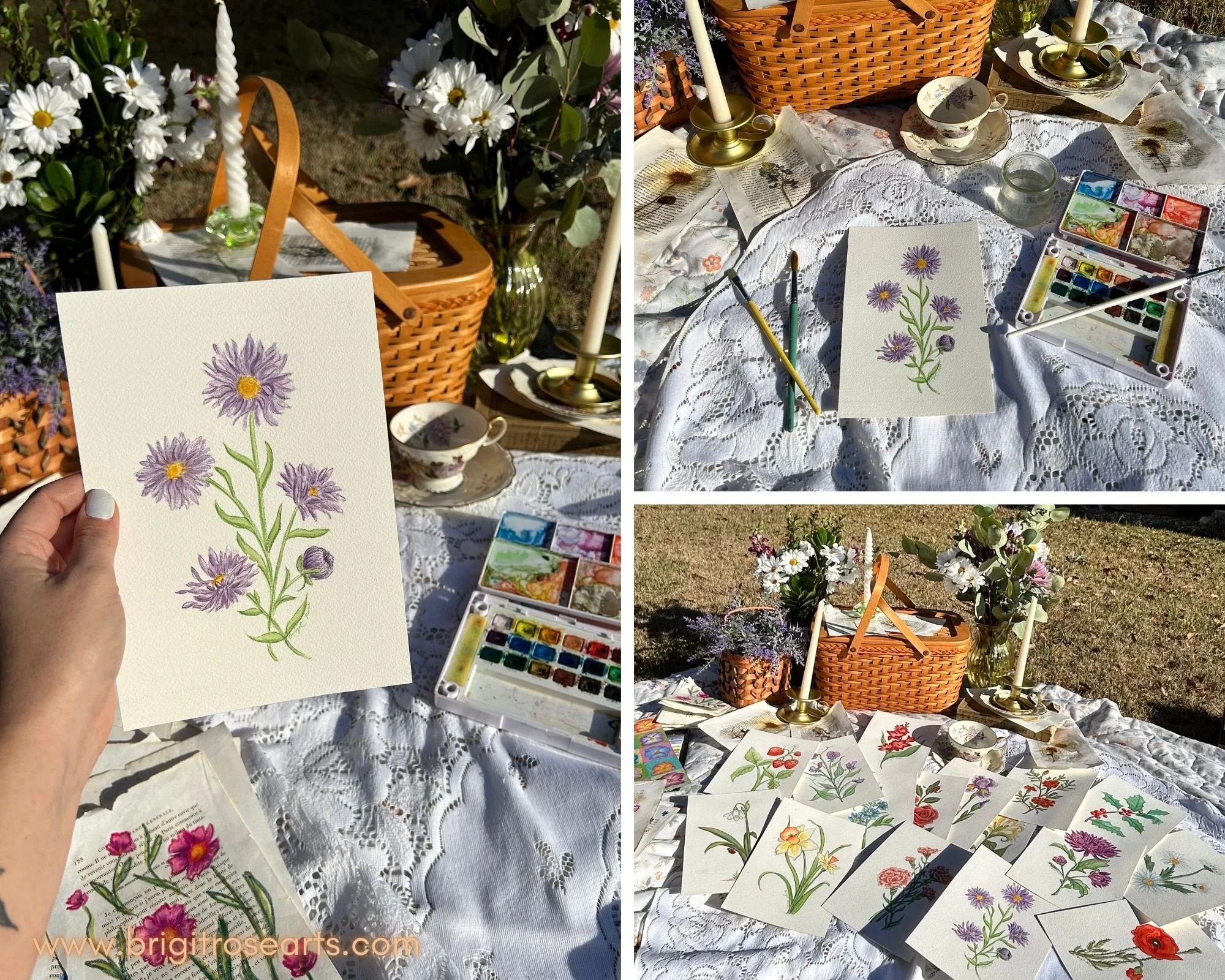
September Birth Flower Aster Original Watercolor Painting by Brigit Rose Arts
Aster’s message to us is:
Your light is more visible in the dark, shine either way.
Aster flowers are petit star shaped blossoms that are most commonly seen in their perfect shade of purple. When seen growing in the fall foliage they mimic little stars flickering in the wind. Aster flowers bring in the wisdom of love, our star elders, patience, faith, and timeless elegance.
Folklore: In Greek myth, asters sprang from the tears of Astraea, the star goddess.
Considered powerful charms against evil spirits.
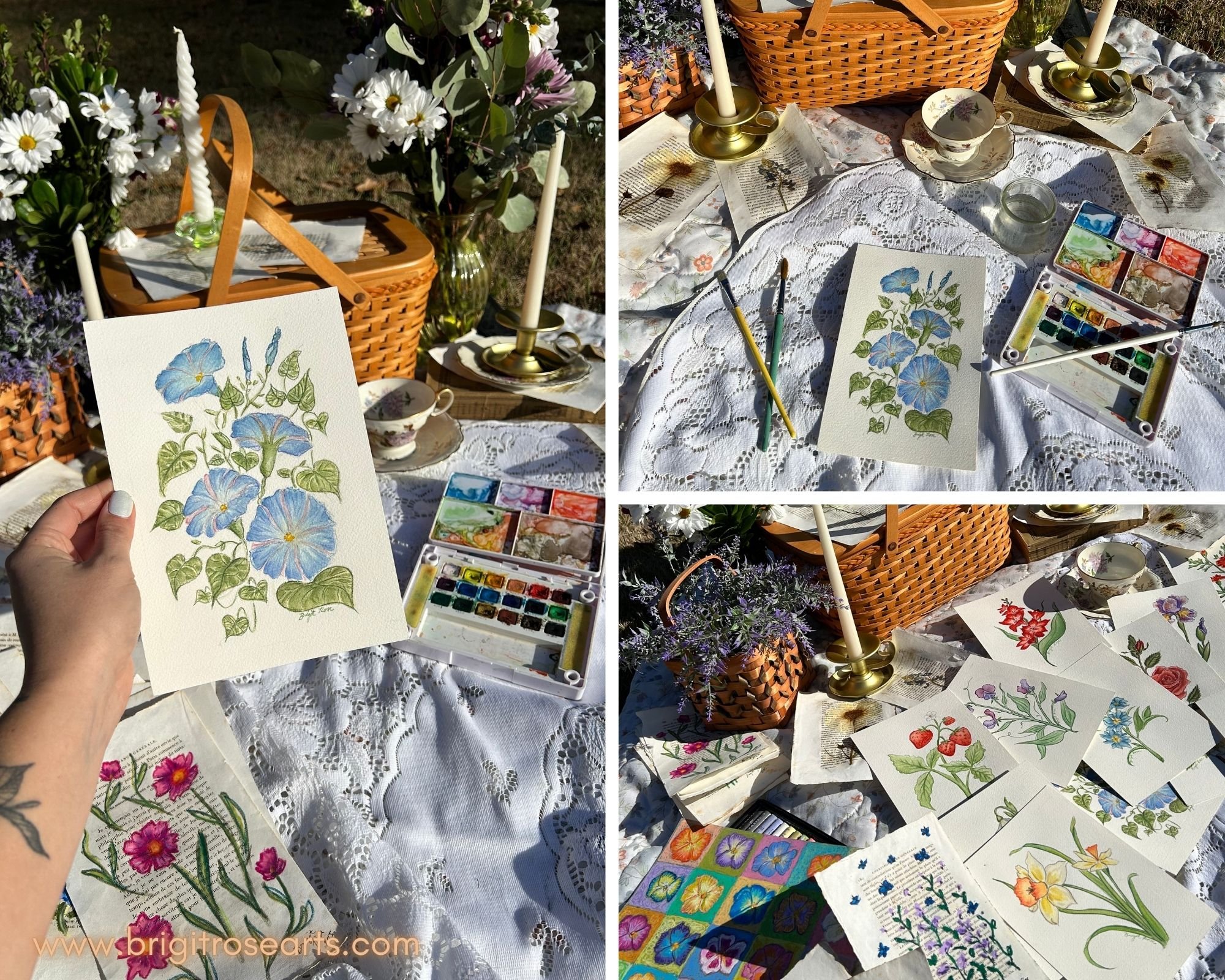
September Birth Flower Morning Glory Original Watercolor Painting by Brigit Rose Arts
Morning Glory’s message to us is:
The greatest love stories are ones that are both fleeting & timeless.
Morning Glories are as enchanting as the sun and the moon themselves. They bloom with the rising sun and quietly close at dusk. The petals glow with a mystical energy as though they were painted by fairies themselves. Morning Glories are messengers of enduring desire, intuition, fleeting beauty, and unrequited love.
Folklore: In Chinese folklore, two celestial star crossed lovers turned into morning glories to forever only meet once a year.
October - Marigold & Cosmos
Fall is here, the spooky season has arrived, and the harvest season is complete. October is one of the best months of the whole year. This month kicks off holiday festivities like pumpkin carving, dressing up for all hallows eve and collecting sweet treats. The veil is the thinnest this time of year and brings in a space to honor loved ones that are no longer here with us on Earth. Flowers for October are the Marigold & Cosmos. They represent the harmony and warmth that the autumn season brings.
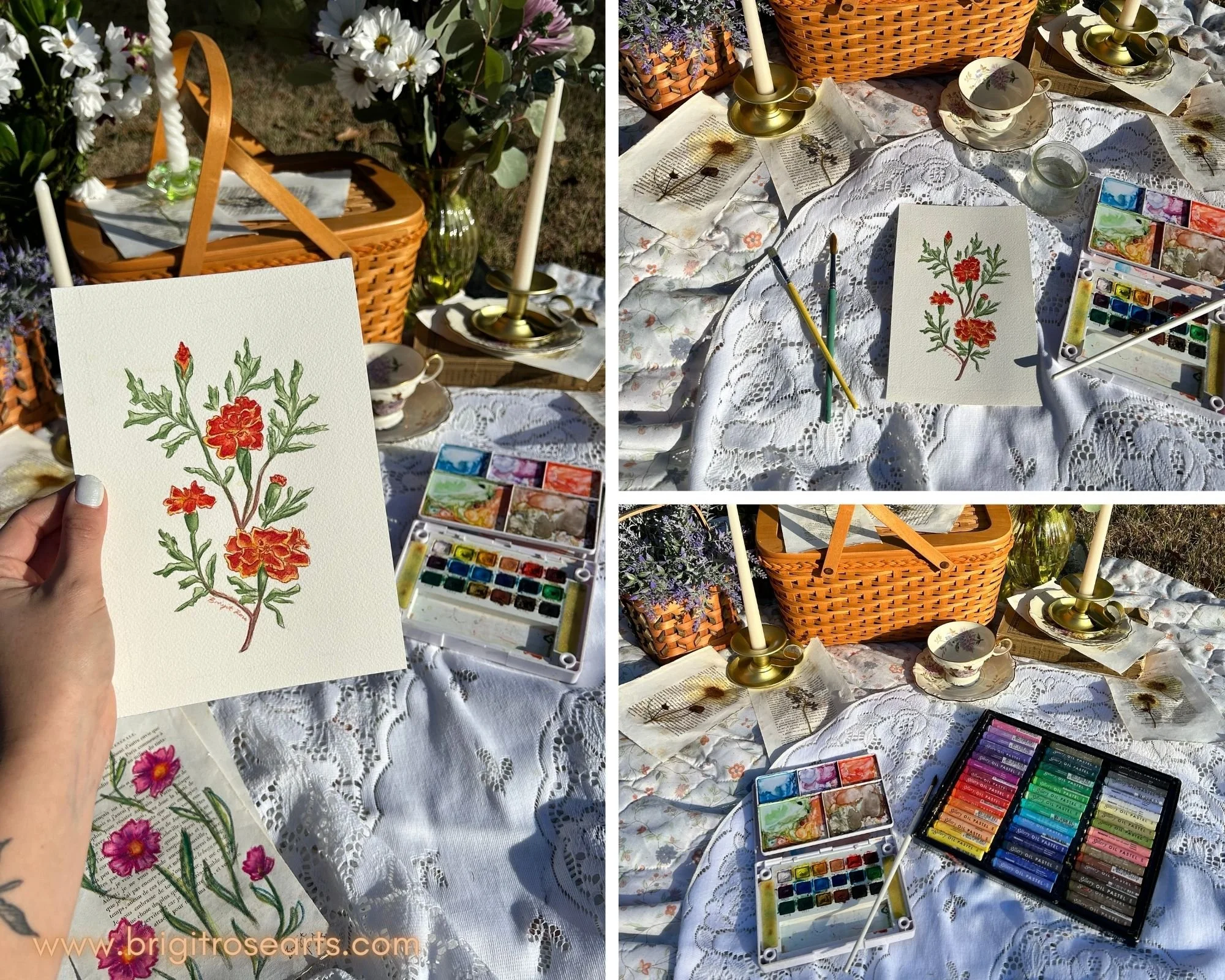
October Birth Flower Marigold Original Watercolor Painting by Brigit Rose Arts
Marigold’s message to us is:
Acts of creations are love letters to your ancestors.
Marigolds are bright ruffled flowers that bloom in a variety of colors. A great flower to welcome in this time of year and to ward off pests in your garden. Marigold's message is one of creativity, passion, grief, and warmth.
Folklore: Sacred in Mexican Día de los Muertos traditions—believed to guide spirits home.
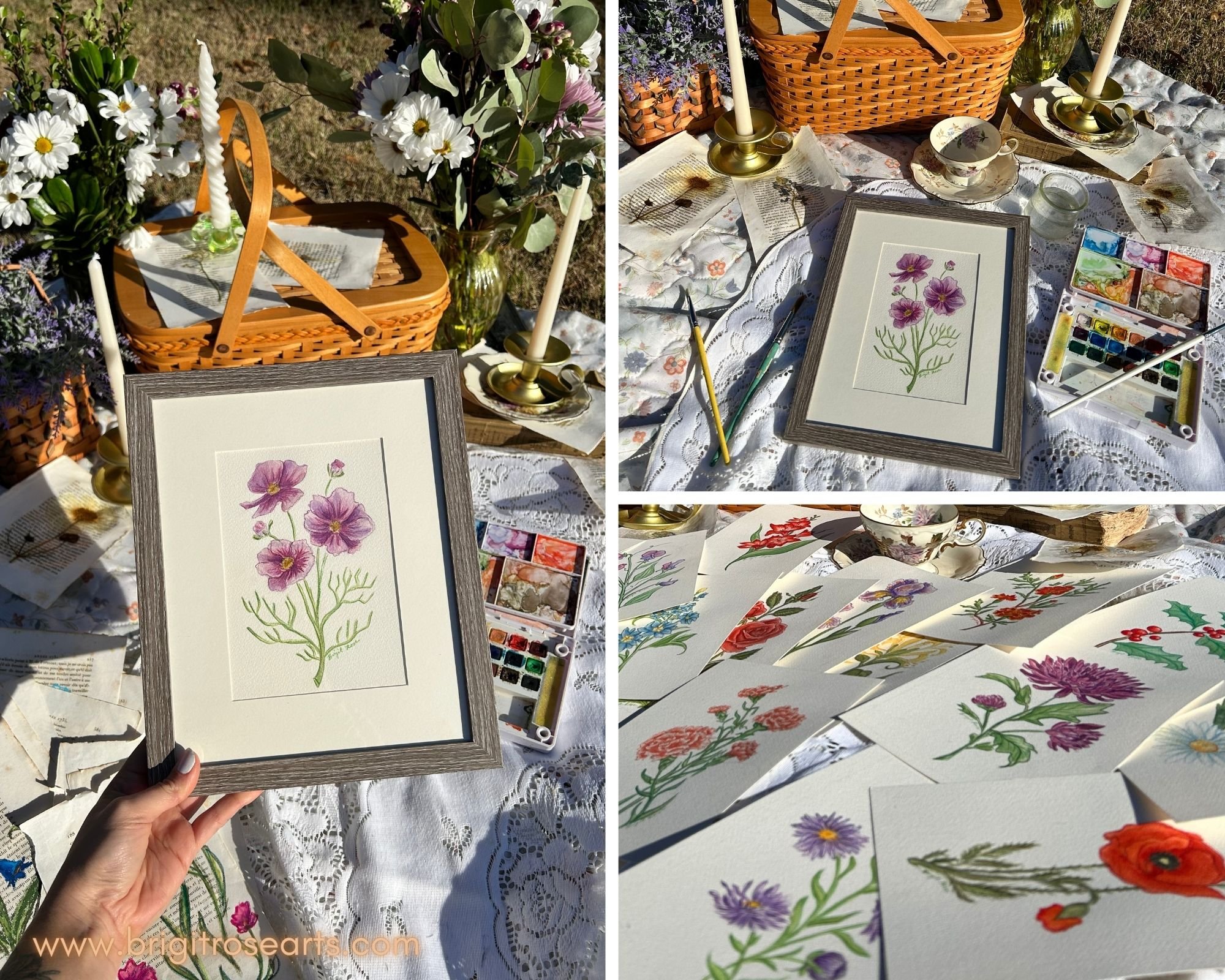
October Birth Flower Cosmos Original Watercolor Painting by Brigit Rose Arts
Cosmos’ message to us is:
The language of the universe is harmony.
Cosmos are as enchanting as the star clusters they're named after. When in bloom they pop up like bright colored stars like blossoms in your garden. Their flowers grow in a variety of hues like orange, pink, purple, and other colors. They bring to us reminders of peace, balance, and harmony.
Folklore: Named by monks who grew them for their perfectly ordered petals symbolizing divine harmony.
November - Chrysanthemum & Peony
We celebrate a lot in these months before the end of the year. In November we celebrate our Veterans, we give thanks with our families and friends, and we welcome in the jolly holidays ahead. November’s flower is the Chrysanthemum & Peony.
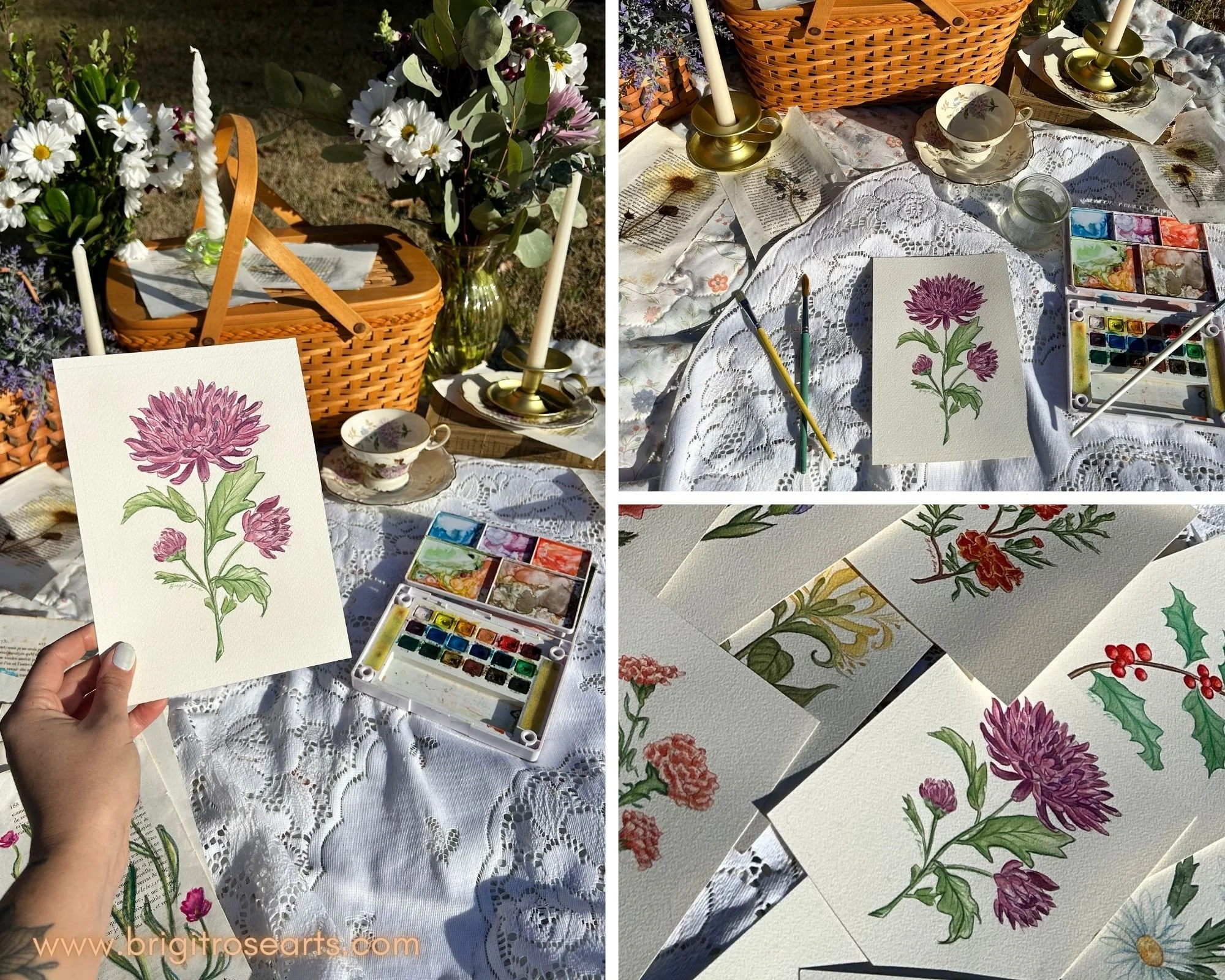
November Birth Flower Chrysanthemum Original Watercolor Painting by Brigit Rose Arts
Chrysanthemum’s message to us is:
The most noble pursuits in life take time.
Chrysanthemums are flowers of a hundred petals. Blooming in beautiful layers and are a lovely decor for the fall season. Its message to us this month is longevity, joy, and truth.
Folklore: In Japan, chrysanthemums symbolize the imperial family and are associated with happiness and nobility.
In parts of Europe, they are funeral flowers representing grief and remembrance.
Peony’s message to us is:
Compassion is our best spent currency.
Peony flowers are large almost bittersweet smelling blossoms that grow into massive bushes. Their roots are favoured in Chinese medicine because of its antioxidant properties but also used for menstrual cramps, inflammation, and improving blood flow. Their blossoms alone are healing just by the sight of their beauty. Their wisdom for us is romance, prosperity, good fortune, honor, and compassion.
Folklore: In Chinese culture, peonies are known as the “king of flowers” and symbolize wealth, prosperity, and good fortune.
In Japanese folklore, peony flowers are believed to have protective powers and are used to ward off evil spirits and demons.
December - Holly & Narcissus
No matter what you celebrate there is some magic in the air. It's the gift giving season and special time to spend with our friends, family, and loved ones. December brings forth tidings of joy and letting go of the year with a bang. The flowers for December are Holly and Narcissus. They bring messages of joy and peace.
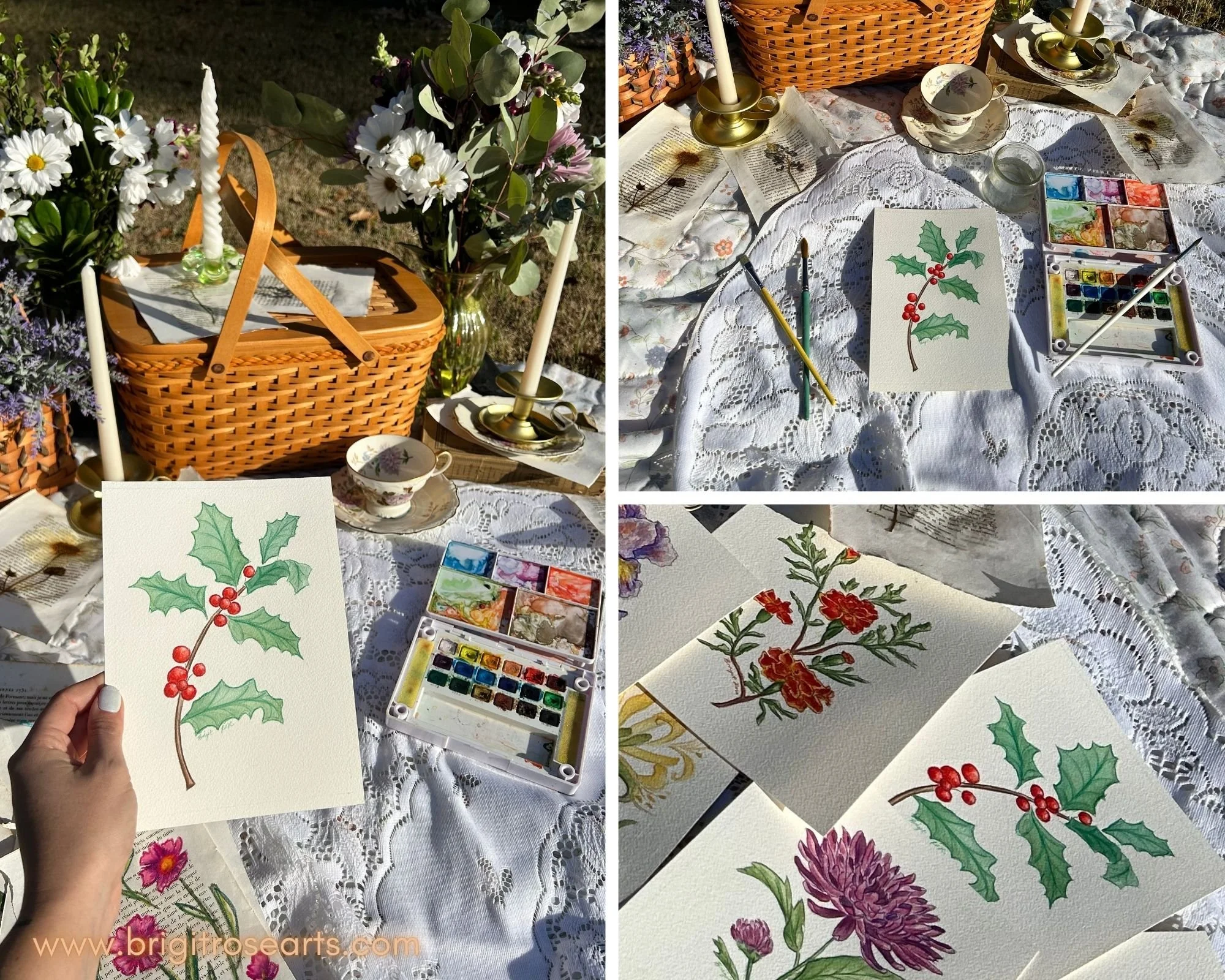
December Birth Flower Holly Original Watercolor Painting by Brigit Rose Arts
Holly’s message to us is:
Love is as eternal as an evergreen.
Holly bushes are a common holiday and yule decoration seen around December. Their evergreen leaves and bright red berries match the color scheme of the season. They bring in tidings of protection, joy, goodwill, eternal life, and peace.
Folklore: Considered sacred by Druids—believed to protect against evil spirits.
In Christian tradition, its red berries symbolize Christ’s blood, and the spiky leaves his crown of thorns.
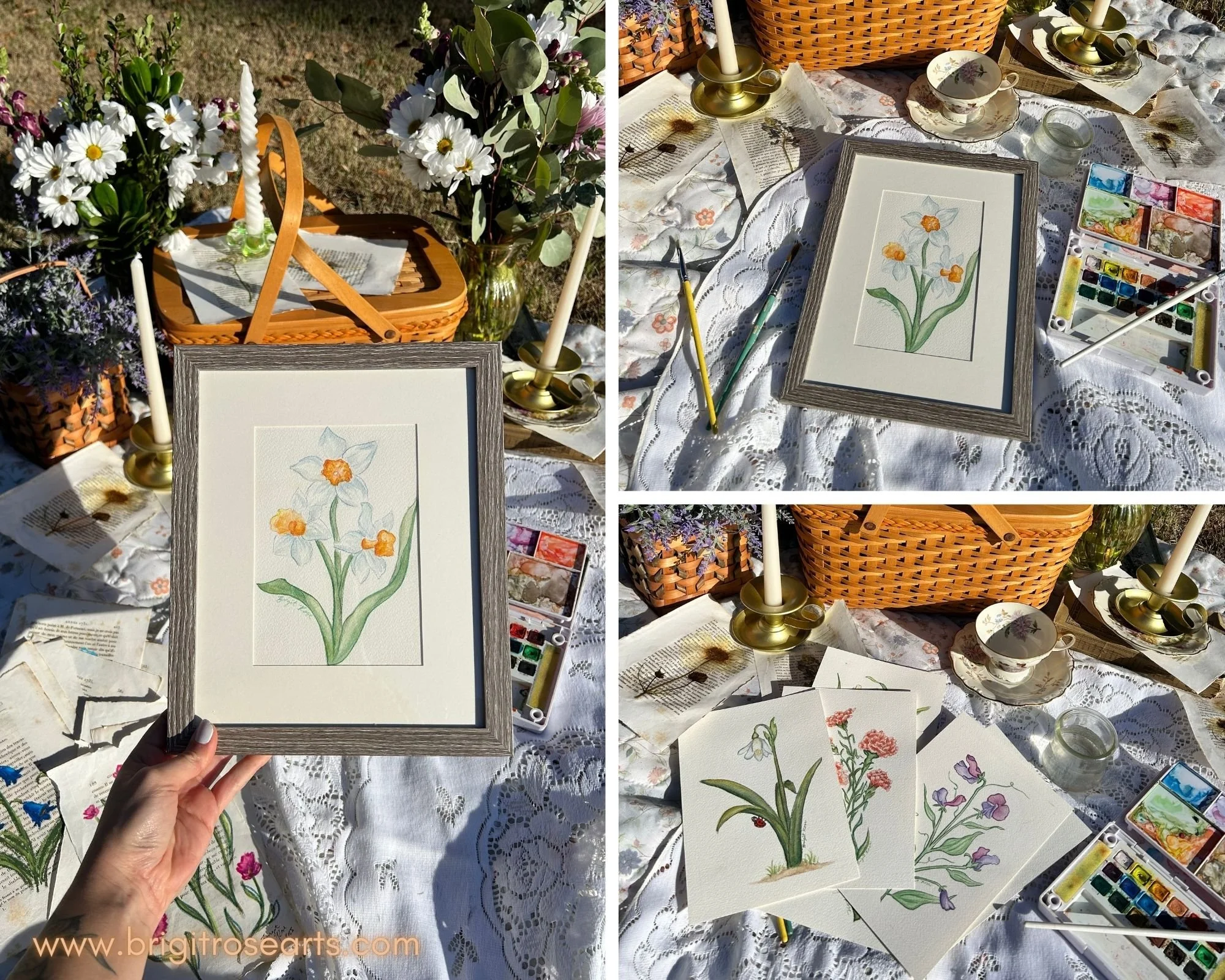
December Birth Flower Narcissus Original Watercolor Painting by Brigit Rose Arts
Narcissus’ message to us is:
Transformation lies in self-reflection.
Narcissus flowers are essentially white daffodils. Known for their paperwhite appearance and make their golden orange and yellow center even more striking. These flowers represent hope, renewal, good fortune, self-reflection, and rebirth.
Folklore: Linked to the Greek myth of Narcissus, who fell in love with his reflection.
In China, blooming narcissus at New Year promises prosperity.